
Agentic Workflows: The Operator's Guide to Running AI as a Team (2026)
Most people run the best model on earth like a chatbot. Operators run it like a team.
An agentic workflow is the difference. Instead of typing one task at a time and grading the reply yourself, you hand the model a goal and let it plan the work, split it across smaller agents, and check its own output before anything ships. It runs for hours, adapts as it goes, and leaves proof at the end instead of promises.
This guide covers what an agentic workflow actually is, the four patterns Google and every serious vendor agree on, and the one shift that separates a demo from a system that earns its keep: plan, delegate, verify. Then five ways we use it to run real marketing work.
Key Takeaways
- An agentic workflow is AI that plans a goal, delegates the work, and checks its own output before anything ships, not a single chatbot reply.
- Google's 4 canonical patterns are planning, tool use, reflection, and orchestration. Reflection is the step most people skip.
- The biggest unlock is a role change: run your best model as the leader that plans and reviews, and let cheaper models do the labor.
- Run as a leader, the token bill usually goes down, not up, because the expensive model only plans, checks, and decides.
- The verifier is non-negotiable. Nothing a worker claims ships until a separate check confirms it.
- Five marketing workflows pay for themselves fast: content backlog, research sprints, a standing team, reference-driven creative, and a brand vault.
What Is an Agentic Workflow?
An agentic workflow is AI that plans a goal, uses tools, iterates, and checks its own output with minimal human input. That's the whole idea. IBM frames it the same way: agentic workflows are AI-driven processes where autonomous agents decide, use tools, and coordinate tasks without a human steering every step. This is not a chatbot answering one prompt. It is a system that keeps working until the goal is met.

Rule-based automation cannot do this. Automation follows fixed branches: if X happens, do Y. It breaks the moment reality does not match the script. An agentic workflow does not break the same way. It reads the situation, picks a new step, and keeps moving. As IBM puts it, this adaptability is the core difference from rigid, rule-based systems. In 2026, this distinction is the line between a tool that needs babysitting and one that does not.
Agentic AI runs on four repeatable stages: perceive, reason, act, learn. AWS describes the same loop. The agent perceives the current state, reasons about what to do next, acts through a tool or API, then learns from the result before it repeats the cycle. An agentic workflow is a loop that gets smarter every time it runs, not a script that runs the same way twice. That single sentence is the whole model. Everything else is detail.
Agent vs Agentic Workflow: What's the Difference?
An agent is the single actor. It reasons, picks tools, and produces output. An agentic workflow is the system built around that actor: the plan, the delegation, the check that confirms the work before it ships. One agent can exist without a workflow. A workflow rarely runs well with just one agent doing everything alone. Understanding this split matters, because the next section breaks the workflow itself into four patterns you can build with today.
The 4 Agentic Workflow Patterns
Every agentic workflow runs on four patterns: planning, tool use, reflection, and orchestration. Neo4j's research on agentic design names these as the core building blocks, and in 2026 they still hold as the frame every production system gets built on. Skip one and the system breaks in a specific, predictable way. Master all four and you have a system that finishes real work without you watching every step.
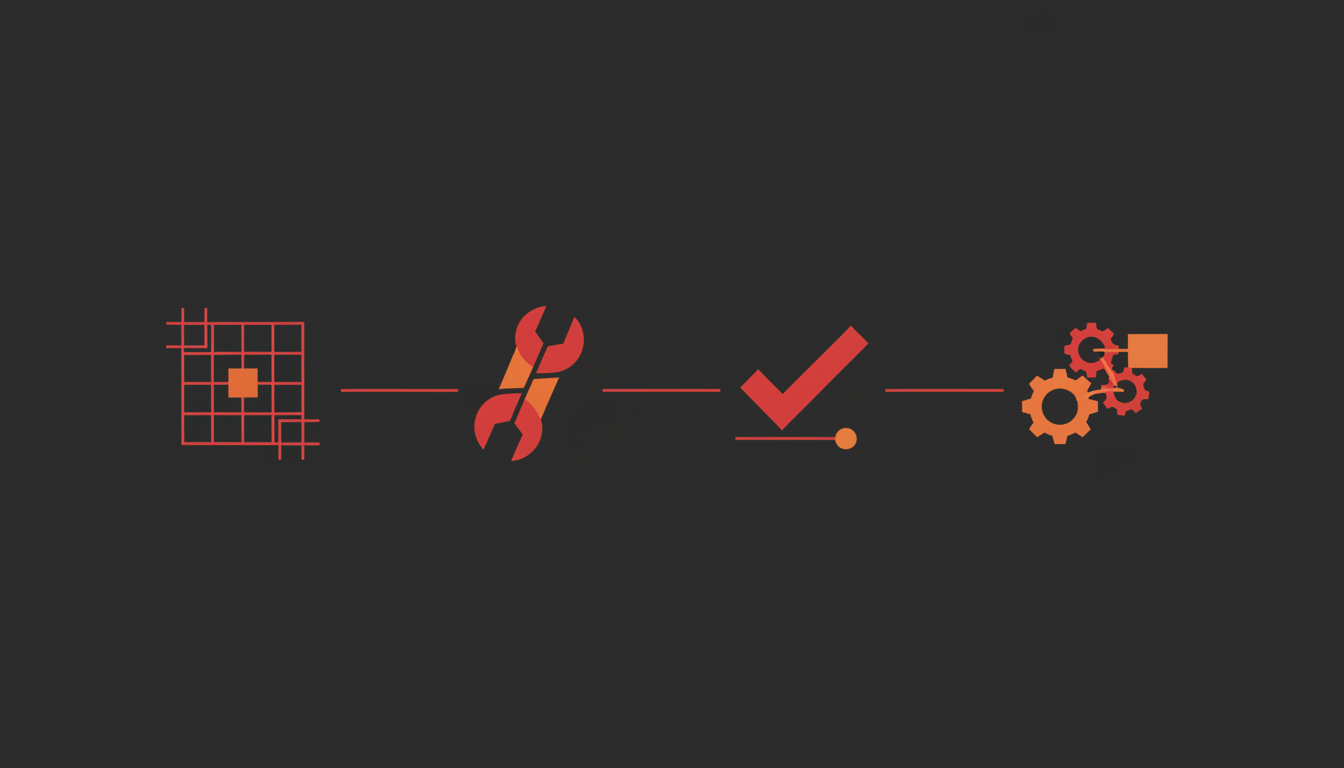
Planning is the first move. The agent takes a broad goal and breaks it into smaller, testable sub-tasks. "Rewrite our blog for 2026 SEO" is not a task, it's a direction. Planning turns it into a checklist: audit each post, flag outdated claims, rewrite the weak ones, verify the fixes. Without this step the agent guesses at scope and drifts.
Tool use comes next. The agent calls APIs, runs searches, reads files, and executes code to gather context and take action. This is what separates an agent from a chatbot. A chatbot can describe a fix. An agent can open the file, make the fix, and run the test. Tool use is the hands; planning is the map.
Why reflection is the pattern most teams skip
Reflection is the pattern most builds skip, and it is what separates a demo from production. Reflection means the agent checks its own output against a real success test before calling the task done. A demo agent writes an answer and stops. A production agent writes an answer, tests it against a defined bar, and redoes the parts that fail. Skip reflection and every output ships unverified, which means every mistake ships too. This is the single highest-value pattern in the whole set, and across our 200+ client engagements, it is the one operators bolt on last, after something has already gone wrong in production.
Orchestration ties the other three together. Multiple specialized agents pass work back and forth: one plans, several execute in parallel, one checks. This is not one giant agent trying to do everything. It's a small team, each agent scoped to one job, coordinated by a plan. Orchestration is what lets an agentic workflow handle a task too large for a single context window or a single skill set.
These four patterns explain what an agentic workflow does. The next question is what makes it fundamentally different from the automation you already run.
Agentic Workflow vs Traditional Automation
An agentic workflow decides what to do next; traditional automation just follows the rule you wrote. Automation runs a fixed sequence: if X happens, do Y. An agentic workflow evaluates the situation, picks the next action, and adjusts as new input arrives. That is the core split, and every other difference in this 2026 landscape flows from it.

Traditional automation breaks the moment reality steps outside its branches. Feed it an input the rules did not anticipate, and it either throws an error or silently does the wrong thing. An agentic workflow reacts differently. IBM describes agentic systems as ones that decide, use tools, and coordinate tasks with minimal human input, which means the system itself absorbs the surprise instead of crashing on it.
The decision-maker changes too. In automation, a human wrote every branch ahead of time, so the logic only knows what you told it to know. In an agentic workflow, the model makes the call in the moment, and a separate verifier checks that call before it ships. "Automation follows the rules you wrote; an agentic workflow decides the rules apply." That is the one-line version worth quoting. Error handling follows the same pattern: automation fails silently, but Neo4j's design pattern research confirms agentic systems self-correct against a success test instead of shipping a broken output unnoticed. Neither approach is obsolete. Deterministic, repetitive tasks, like sending a receipt email after checkout, still belong to plain automation. Save the agentic system for goals that are ambiguous or multi-step, where a rulebook would need thousands of branches to cover the same ground. For a full breakdown of where each one wins by use case, see agentic marketing vs marketing automation.
Agentic Workflow vs Traditional Automation
| Traditional Automation | Agentic Workflow | |
|---|---|---|
| Logic | Fixed rules and branches | Model decides step by step |
| Adapts to new input | No, breaks on the unexpected | Yes, adjusts in real time |
| Decision-making | Predefined by a human | Delegated to the model, checked by a verifier |
| Error handling | Silent failure | Self-corrects against a success test |
| Human role | Write and maintain the rules | Set the goal, steer, own the taste |
| Best for | Repetitive, deterministic tasks | Ambiguous, multi-step goals |
Once you see where automation stops and judgment starts, the next question is who should be making that judgment call on your team.
The Operator Shift: Run the Model as a Leader, Not a Worker
The fastest upgrade in agentic AI is not a better model. It is a role change. Stop typing tasks at your best model and treating it like a chatbot. Run it as the leader of a team, and let cheaper models do the labor under it.
Most builds get this backwards in 2026. They put the expensive model on keystrokes: writing the draft, fixing the CSS, renaming the file. That is worker output priced at leader rates. The operator move flips the org chart. The leader plans the goal, breaks it into tasks, and hands each task to a cheap worker agent. Workers run in parallel. The leader reviews every finished piece against the original plan before anything ships. Anthropic's research on building effective agents backs this shape directly: reliable agent systems separate an orchestrator that plans from workers that execute, with evaluation kept as its own distinct step.

At AI Topia, we run our entire marketing team this way. One seat plans a content sprint, a research pull, or a campaign build. Worker agents draft, scrape, and format at the same time. The leader checks the output, not the process. Across our 200+ client engagements, this is the one architecture change that turns a demo into a system that ships daily, which is exactly how we run our entire marketing team as an agentic system.
A leader-worker split alone is not enough. Add a verifier. The verifier is a separate check that confirms a worker's claim before it ships, not the worker grading its own homework. If a worker says the data point is correct, the verifier pulls the source and confirms it. If a worker says the code passes, the verifier runs the test. Nothing ships on a worker's word alone. Anthropic's guidance is blunt on this point too: evaluation has to sit outside the agent that produced the work, or errors compound silently across steps.
The economics run backward from what most people expect. Run the expensive model as leader instead of worker, and the token bill usually drops, not rises. The costly model spends its turns planning and checking. It never touches the repetitive labor. Cheap models absorb the volume: the drafts, the scrapes, the first-pass formatting. A team of workers under one leader with one verifier finishes more work for less spend than one expensive model doing everything alone, one task at a time. That is the core driver behind a working multi-agent marketing system.
This shift changes what "building an agentic workflow" even means. It stops being about a smarter prompt and starts being about a smarter org chart.
How to Build an Agentic Workflow: 3 Rules
You build a working agentic workflow with three moves: stop overguiding, keep the context file light, and give every goal a loop with proof. Most guides hand you a checklist of guardrails and call it a system. That's not enough. In 2026, the operators getting real output from AI Topia's own agentic setups skip the scaffolding and build around outcomes, not steps.
Rule 1: Do not overguide. Give the model an outcome, the constraints, and the reason behind them. Then delete the step-by-step instructions. A model told "write five headlines, keep them under 60 characters, we're testing for click-through" will outperform one handed a 12-step script. Scaffolding cages the reasoning you're paying for. "Do X, then Y, then Z" turns a reasoning engine into a macro. Strip it out and the model plans its own path to the outcome, which is the entire point of agentic work.
Rule 2: Keep the context file light. A context file only needs three things: what the project is, the commands the agent will run, and the mistakes it keeps making. Nothing else belongs in there. Bloated context files bury the signal the model actually needs under pages of history and edge cases. A file under one page beats a file with ten sections nobody rereads. Every extra paragraph is a paragraph the model has to weigh against the task at hand, so trim it after every run. This lean-context discipline is the same one behind our Claude Code marketing automation setup.
Rule 3: Use goals and loops with proof. Every loop needs four things: a finish line, pasted proof, a written brake, and an honesty line. The finish line states exactly what "done" looks like, not "improve the page" but "conversion copy above the fold, three variants, each under 40 words." Pasted proof means the agent shows its actual output in the loop, not a claim that it worked. A written brake sets a hard turn limit, so a loop that isn't converging stops instead of running up your bill all quarter. The honesty line is one instruction: report what actually happened, even if it's a failure. Skip the honesty line and the agent will tell you it succeeded when it didn't.
What guardrails actually matter?
Three guardrails matter more than any others: output checks, permission scope, and a hard turn limit. An output check is a real test the work has to pass, not a self-report. Permission scope means the agent only touches the files or tools the task requires, nothing wider. A hard turn limit caps the loop at N attempts, so a loose goal can't spiral into a runaway bill. "The verifier that confirms every claim before it ships is what separates a working system from an expensive chat log," and that single sentence is the difference between a demo and something you can run every week.
Those three rules turn a chatbot session into a system, and they're exactly what powers the five marketing workflows below.
5 Agentic Workflow Examples in Marketing
Five agentic workflows already pay for themselves in marketing: a content backlog re-SEO with a reviewer on every batch, a market research sprint with a checker that attacks every claim, a standing marketing team run from one seat, reference-driven creative built against a taste folder in a loop, and a brand vault that briefs every future campaign. Each one follows the same shape from the last section. A leader plans, workers execute, a verifier checks. Here is what that looks like on real marketing work in 2026.
1. Content backlog re-SEO. You point the leader at 200 old posts. It reads each one, decides what changed in your niche, and rewrites the outdated parts. It does not touch the parts that still work. Worker agents handle a batch each, in parallel, so 200 posts do not take 200 sessions. A reviewer checks every rewritten batch against the original claim and the current source before it ships. Nothing goes live because a worker said it was done. This is agentic marketing applied to the most boring, highest-value task in content ops: the archive nobody wants to touch by hand.
2. Market research sprints. A single research question, like "how are our top five competitors pricing their new tier," used to take a day of tab-switching. Now parallel workers each mine one competitor or one demand source at the same time. A checker agent then attacks every claim those workers bring back. It asks for the source, the date, and the exact quote. Claims without a real citation get cut before they reach you. The sprint finishes in under an hour instead of a day, and every number in the final brief has a receipt attached.
3. A standing marketing team from one seat. This is the workflow that changes daily output the most. One person runs it. A scout agent watches your market for signal: a competitor move, a trending question, a shift in demand. A writer agent turns the strongest signal into a content atom, a short post or a draft angle. A follow-up agent drafts the outreach or the distribution plan for that atom. All three run without you typing three separate prompts. You review the finished stack once, not the process three times.
4. Reference-driven creative. Instead of describing a visual style in words, you build a folder of the ads, posts, or pages that hit the tone you want. The agent generates a draft, compares it against the folder, and scores the gap. It loops until the draft matches the taste folder closely enough to pass. This beats prompting for "bold, modern, energetic" every time, because the folder is the spec and the loop is the QA step. The creative gets closer to your reference set with each pass, not further from it.
5. The brand vault. Every campaign starts from zero if nothing captures what worked before. A brand vault fixes that: an interlinked knowledge base of your positioning, past claims, proof points, and brand voice rules, built once and updated after every campaign. When a new campaign starts, the leader agent reads the vault first and briefs itself. No one re-explains the brand to the model every quarter. The vault compounds. Each campaign it briefs gets sharper than the last, because it inherits everything the vault already knows.
These five workflows share one habit: nothing ships until a check confirms it, whether that check is a reviewer, a checker, or a taste-folder comparison. Pick your delegation, and pair it with the best AI agents for marketing for the specific job each role needs to do. Delegation earns its keep once it stops being a shortcut and starts being a system. What it cannot do, no matter how good the loop gets, is decide what deserves your reputation.
What Stays Human (and How to Start)
Taste stays human. An agentic workflow can plan, delegate, and check its own output, but it cannot decide which idea is worth your reputation. That call is yours in 2026, and it will still be yours after the next model release.
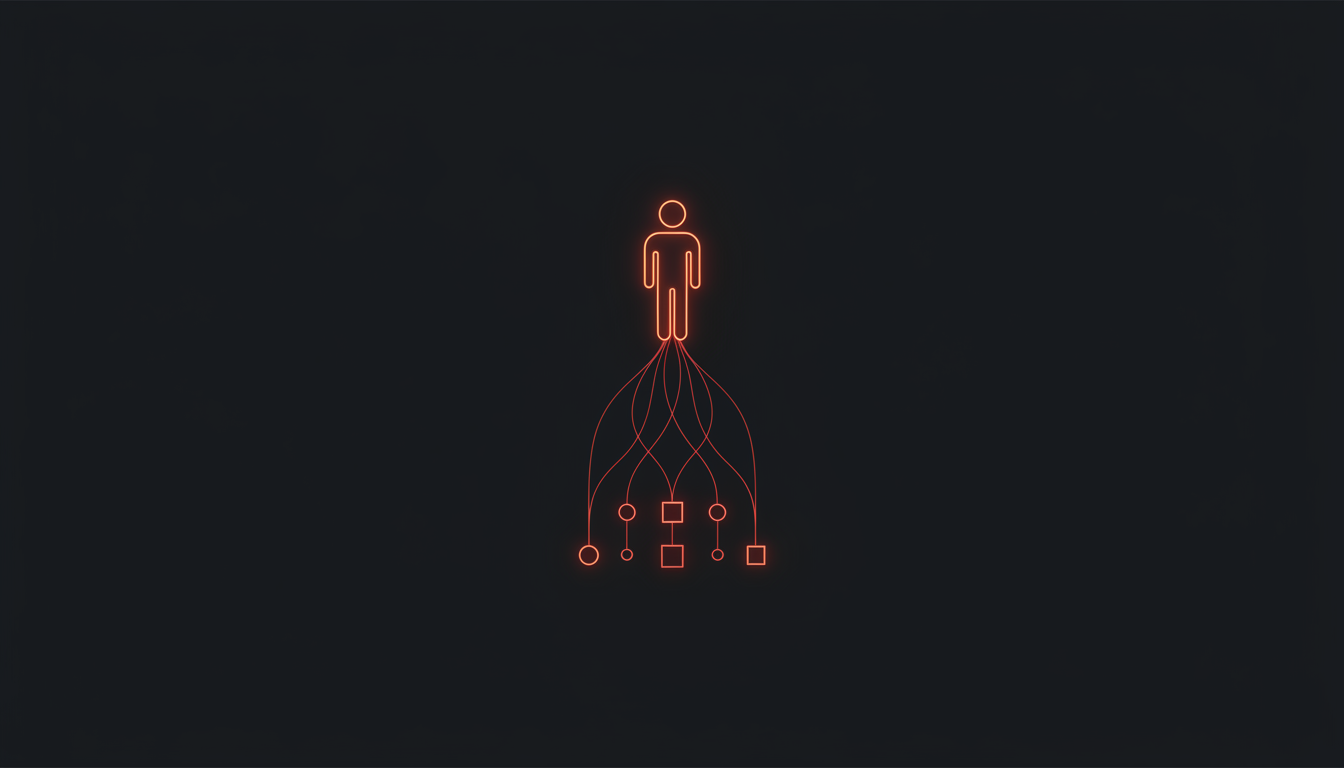
Here is the line that matters most: the claim still has to be true, and only you know if it is. A verifier can confirm a number matches a source. It cannot confirm the source is the right one to trust, or that the claim fits what your brand actually stands for. That judgment sits with you, every time, no exceptions.
This is not a warning against agentic workflows. It is the reason they work. The system handles the labor. You handle the truth and the taste. Split any other way, and you either slow the system down or ship something you would not sign your name to.
Start small, on purpose
Do not build a fleet on day one. Start with one workflow and one verifier. Pick a task you already do by hand, one with a clear finish line, like re-checking a batch of claims or rewriting a stack of old posts. Add a leader that plans it, a worker that does it, and a verifier that checks it. Run it for real. Fix what breaks. Only then add a second workflow.
A fleet built before the first workflow is trusted just multiplies your mistakes faster. One working loop, proven on real output, is worth more than five untested ones. That is how AI Topia's own marketing system grew, one verified workflow at a time, not all at once.
The shift from chatbot to team is not about adding more agents. It is about deciding, clearly, what stays yours.
Frequently Asked Questions
What is an agentic workflow?
An agentic workflow is an AI-driven process where an agent plans a goal, uses tools, iterates, and checks its own output with little human input. IBM describes it as autonomous agents that make decisions and coordinate tasks. Unlike fixed automation that follows set branches, an agentic workflow adapts to real-time data and self-corrects when it misses.
What is an example of an agentic workflow?
Re-doing SEO across a 200-post library is a clear example. The leader agent plans the batches, worker agents rewrite each post in parallel, and a separate verifier checks every change against a real test before it ships. A job that used to take a quarter lands in days, with a receipt on every edit.
What are the 4 stages of agentic AI?
The four stages are perceive, reason, act, and learn. The agent takes in context, plans a path, acts through its tools, then updates from the result. AWS uses this same four-stage frame. Each loop feeds the next, so the workflow gets sharper the longer it runs.
What is the difference between an AI agent and an agentic workflow?
An AI agent is a single actor that reasons and calls tools. An agentic workflow is the whole orchestrated system around it, often several agents plus a verifier, arranged to hit one goal. Put simply, the agent is a worker and the workflow is the team, plan, and review that make the work reliable.
Do agentic workflows cost more to run?
Usually less, when you run it as a leader-worker split. The expensive model only plans and checks; cheap models do the labor. That keeps token spend low even on long jobs. Add a hard turn limit so a loose goal cannot loop forever and run up the bill.
What is the difference between an agentic workflow and marketing automation?
Marketing automation fires fixed sequences when a trigger hits, like a welcome email after a signup. An agentic workflow decides what to do, produces the work, and checks it, so it handles open-ended tasks a rigid sequence cannot. Automation follows your rules; an agentic workflow works toward your goal.
How do you keep an agentic workflow from going off the rails?
Three brakes keep it honest. A verifier confirms every claim before it counts as done, so there is no self-graded homework. Scoped tool permissions limit what it can touch. And a hard stop after a set number of turns caps cost. Together they turn an open-ended agent into a system you can trust unattended.
Run It as a Team, Not a Tool
An agentic workflow is not a smarter chatbot. It is a shift in who does the work. The model plans, cheap workers do the labor, and a verifier checks it, while you steer and own the taste. Start with one workflow and one verifier, not a fleet. Prove it on a job you already trust yourself to check, then widen the loop.
The taste stays yours. The claim still has to be true, and only you know if it is. But the hours of production between the idea and the proof? That is what an agentic workflow is for.
Want the system built and run for you? Book a call. Prefer to run it yourself? Join the community for the workflows and templates.
Ready to Automate Your Business?
Book a 30-minute call to discuss how AI can transform your Marketing, Sales, or Operations.
Book a Call