
AI UGC vs Real UGC: When to Use Each (2026 Guide)

A brand I work with needed 40 video ads in a week for a new product launch. Hiring 40 creators was impossible. Using only AI felt wrong for a product that runs on trust.
So they did both. AI UGC for the top-of-funnel volume play. Real UGC for the bottom-of-funnel conversion layer.
The AI ads brought in 2x the volume at 1/10 the cost. The real UGC converted at 3x the rate on high-ticket orders.
The question isn't "which one is better." It's "which one belongs where."
Here is a practical framework for deciding.
What Is AI UGC, Really?
AI UGC (Artificial Intelligence User-Generated Content) is video content that looks like a real person filmed it on their phone — but was generated by AI. An avatar speaks your script. The background is synthetic. The hands holding the product are rendered.
The platforms making this possible:
- Arcads — custom AI influencers with character consistency
- CreateUGC — social-first video ads from a product link
- HeyGen — scalable avatars with script-to-video in minutes
- Creatify AI — turn URLs into marketing videos with auto-captions
The output is convincing. A 2026 study by Superscale found that audiences could not distinguish AI UGC from real UGC in blind tests 58% of the time.
But "looks real" is not the same as "converts real."
What Real UGC Still Owns

Real UGC is a customer or creator filming themselves with your product. It is imperfect, unscripted, and human. The lighting is bad. The background is a messy bedroom. There is a five-second pause where they forgot what to say.
That imperfection is the asset.
Real UGC signals: "a real person spent their own money on this and bothered to talk about it." That signal is impossible to fake at scale. The brain knows, even when the eyes can't tell.
Real UGC wins in three specific scenarios:
High-ticket purchases ($500+). A $30 mattress protector? AI UGC is fine. A $5,000 coaching program? Buyers want to see a real human say "this changed my business." The purchase risk is too high for a synthetic face.
Trust-dependent verticals. Health, finance, legal, medical devices. Using AI UGC in these spaces carries real regulatory and reputational risk. The FTC has been clear that AI-generated endorsements must be disclosed.
Brand voice and personality. If your brand is built on a specific human's energy (founder-led, personality-driven), AI UGC dilutes it. The audience knows the difference between the actual founder and a synthetic version, even if they can't articulate why.
Where AI UGC Dominates
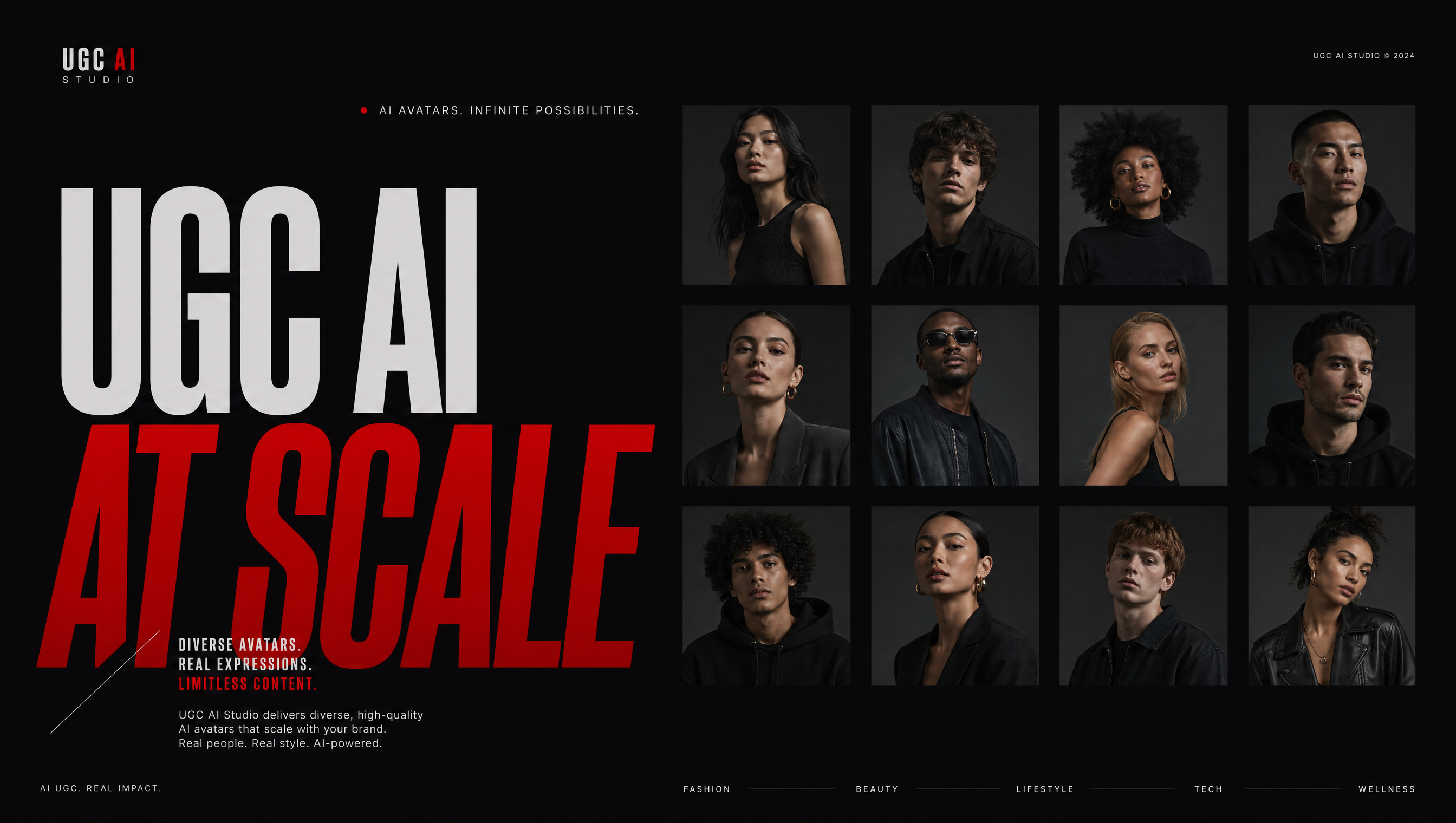
AI UGC is not a replacement. It is a force multiplier. It wins in different scenarios.
Testing velocity. You need to test 20 ad variations by tomorrow. Real UGC requires briefing, shipping, filming, editing. AI UGC requires a script and a product URL. The speed advantage is 10x to 50x.
Lower AOV products ($20-$150). The purchase decision is low-risk. If the ad looks plausible and the offer is good, the conversion happens. The trust signal is weaker but the cost is so much lower that the ROAS math works.
Volume plays. One real creator produces 3-5 pieces. One AI UGC system produces 50-100 variations from the same script. For brands that need to flood the feed and find winners, AI UGC is the only way to hit that volume.
International scaling. Real UGC requires creators in each market. AI UGC lets you take one script and produce it in 29 languages with localized avatars. The cost of entering a new market drops to near zero.
The Decision Framework
| Scenario | Use AI UGC | Use Real UGC |
|---|---|---|
| Product price < $150 | ✅ | — |
| Product price > $500 | — | ✅ |
| Testing new creatives | ✅ | — |
| Hero creative (always-on) | — | ✅ |
| International markets | ✅ | — |
| Trust-dependent (health, finance) | — | ✅ |
| 50+ variations needed | ✅ | — |
| Brand storytelling | — | ✅ |
| Speed to market | ✅ | — |
| Emotional connection needed | — | ✅ |
The rule: AI UGC fills the funnel. Real UGC closes it.
How Smart Brands Combine Both
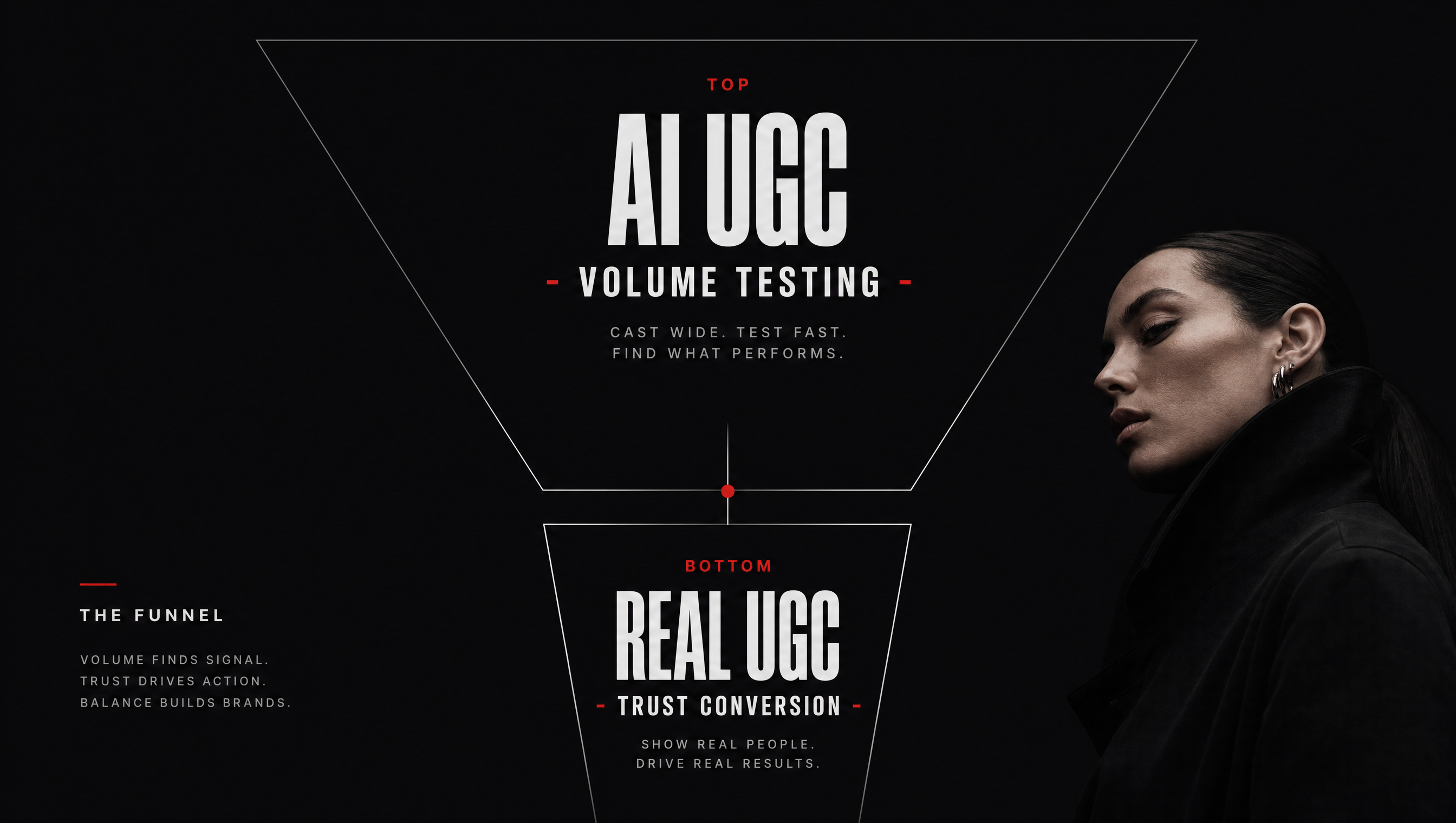
The brands getting the best results do not choose one or the other. They use AI UGC at the top of the funnel for volume and testing, and real UGC at the bottom for conversion.
Example flow:
- Generate 30 AI UGC variations from one product brief
- Test across 5 audiences, find the 3 winning hooks
- Brief real creators to film those 3 hooks authentically
- Run real UGC as the main creative, AI UGC as retargeting and lookalike fuel
The AI UGC tells you what works. The real UGC capitalizes on it.
One brand running this exact playbook saw:
- 40% lower CPA on AI UGC in top-of-funnel
- 3.2x higher conversion rate on real UGC in bottom-of-funnel
- Combined: 2.1x overall ROAS lift vs using either alone
The Compliance Angle
The FTC requires clear disclosure for AI-generated endorsements. The rule is simple: if the consumer would not know the content is AI-generated, you must label it.
Best practices in 2026:
- "Synthetic" or "AI-generated" label in the ad copy (not buried in a caption)
- Clear distinction between real testimonials and AI-generated ones on landing pages
- No AI UGC for categories where authenticity is a legal requirement (health claims, financial advice, medical devices)
The brands that label honestly perform better anyway. Audiences respect transparency, and the algorithm rewards it.
When to Never Use AI UGC
- Political or advocacy content. The risk of misinformation is too high, and the backlash is career-ending.
- Crisis communications. A real human needs to say the words.
- Founder-led brands. If you are the face of the company, be the face of the company. AI UGC for your own brand is a signal that you do not believe in your own product enough to show up.
- High-trust, low-volume businesses. A custom software consultancy does not need AI UGC. They need one great case study from a real client.
The Future
As of August 2026, the gap between AI UGC and real UGC is closing fast. The Superscale study showed that 58% of viewers could not tell the difference. By Q1 2027, that number will be higher.
The brands that will win are not the ones that pick a side. They are the ones that build a system where AI UGC and real UGC feed each other — AI for testing and volume, real for trust and conversion.
The question is not "can AI do what humans do?" The question is "what should only humans do?"
Answer that, and you know exactly where to use each.
Want to see how we build AI UGC systems for brands? Book a call — We'll show you a working system.
Ready to Automate Your Business?
Book a 30-minute call to discuss how AI can transform your Marketing, Sales, or Operations.
Book a Call