
What Is Jev AI? How I Use TypeSafe AI's Model to Score Videos Before Filming
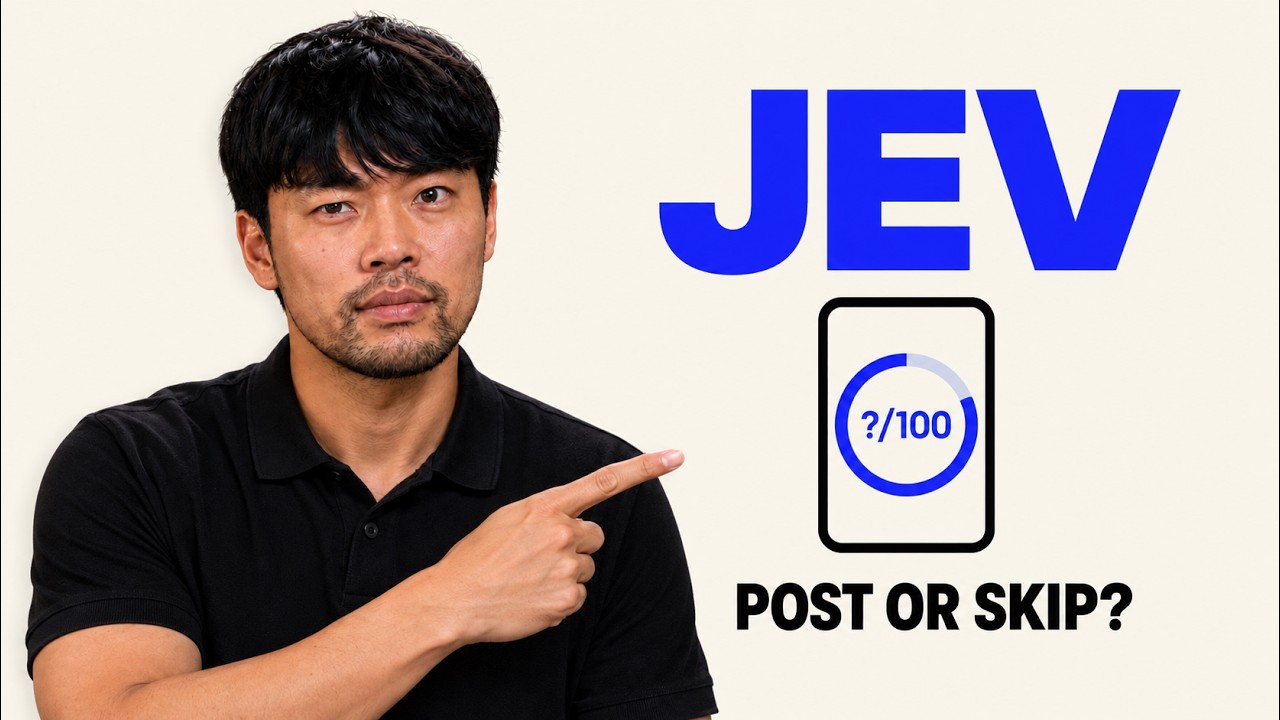
What if you could find out a video idea is weak before you spend three hours filming and editing it?
That's the question that pulled me into Jev, the first model from TypeSafe AI. I run a video business, so I tested it on the one problem that costs us the most time: deciding what is worth producing.
Here's what Jev is, how it differs from ChatGPT or Claude, and the two workflows I now use it for.
What Is Jev AI?
Jev is a "System One" model from TypeSafe AI. Instead of generating text, it takes your input plus a set of possible answers and returns a decision with a probability attached. TypeSafe AI launched it on September 15, 2026, claiming responses in 70 to 500 milliseconds, roughly 40 to 200 times faster than frontier LLMs, at a fraction of the cost.
The name "System One" comes from Daniel Kahneman's split between fast, intuitive thinking (System One) and slow, deliberate thinking (System Two). LLMs are System Two: they reason out loud, one token at a time. Jev is built for the fast judgment call.
Here's my full breakdown on video:
Jev vs LLM: The Invoice Example
The easiest way to understand the difference: give both models the same invoice and ask, "Is this fraud?"
A normal LLM reads the invoice, then writes an explanation one token at a time. "This invoice appears legitimate based on the line items and vendor history..." That answer can take several seconds, because the model is writing a paragraph.
Jev doesn't write anything. You give it three options: fraud, clean, or needs review. It points to "clean" and returns a probability, say 88%.
| LLM (ChatGPT, Claude) | Jev (TypeSafe AI) | |
|---|---|---|
| Output | Generated text | A choice from options you define, plus a probability |
| Speed | Seconds | 70 to 500 ms (TypeSafe's claim) |
| Best for | Writing, reasoning, explaining | Scoring, classifying, routing, verifying |
| Many questions at once | One answer at a time | Many judgments in one parallel pass |
| Hallucination | Can invent facts | Can only pick from your options |
The LLM generates an answer. Jev makes a decision. That distinction is what makes it useful for content.
Why This Matters for Video
Anyone can generate 10 videos a day with AI now. The bottleneck has moved from making to choosing. The skill isn't producing anymore. It's knowing what not to publish.
Scoring used to be a luxury. In our own content stack, the scoring layer was one of the most expensive parts, because an LLM had to read every transcript and write out its judgment.
Jev changes that math. Because it scores many small questions in parallel, one request can answer all of these about a single video:
- Is the hook strong?
- Is the structure clear?
- What format is this?
- Does it fit the niche?
- Is the title click-worthy?
- Do the title and thumbnail work together?
When judgment costs cents, you can score every script, not just the one you were already sure about.
How to Get Jev API Access
Jev is in early access. Go to typesafe.ai, join the waitlist, and once you're approved, generate an API key from the dashboard. Save it in your .env file and call it from your own scripts or tools.
Use Case 1: Score Shorts Scripts Before Filming
For Shorts, I built a small dashboard that pulls 248 posts from creators in my niche, with their real views, likes, comments, and shares. Jev scores each caption for hook strength, structure, and content type.
That gives me two things side by side: what the model sees in the content, and what people actually engaged with.
Then I paste in my own scripts and hit score. Within a second, it returns hook strength, structure, and niche fit. For Shorts, hook strength matters most, since the first second decides whether anyone stays.
My workflow:
- Score the script with Jev
- Copy the weak areas into Claude or ChatGPT and rework just those parts
- Rescore, and repeat until the script clears 85 to 90
- Only then film and edit
That's the difference between creating content and engineering it. You walk into the shoot with a script that already scored well against what works in your niche.
Use Case 2: Test YouTube Titles and Thumbnails
On long-form YouTube, packaging decides almost everything, whether we like it or not. The title, the thumbnail, and the first 30 seconds determine whether the rest of the video gets watched.
So I pulled 415 videos from the biggest AI channels and used Jev to score them for hook strength in the first 30 seconds, niche fit, title click-worthiness, and how well the thumbnail and title work together. Next to each score I can see the video's views percentile and watch-time percentile.
When I have a new idea, I start with the packaging:
- Write a rough title and describe the thumbnail concept
- Score both with Jev against the library
- Take the weak scores into ChatGPT with vidIQ and generate title variations
- Rescore until click-worthiness and niche fit go up
My first rambling title for this very video scored around 7 out of 10. A few rounds of variations pushed click-worthiness and niche fit up, all before I filmed a single frame.
What Jev Can't Do
- It doesn't guarantee virality. The goal is to catch weak ideas earlier and improve strong ones faster, not to predict views perfectly.
- It doesn't write. You still need an LLM, or a human, to rewrite the script. Jev tells you where it's weak.
- You define the options. Jev picks from answers you set up front (up to 255 choices), so your scoring rubric matters.
- It's early. Access is waitlisted, and the speed and cost numbers are TypeSafe AI's own claims.
Where Jev Fits in Our Video Engine
At AI Topia, Jev is being added to the signal and scoring layer of our Video Engine, the system we use to produce weekly founder video. Scripts, titles, and thumbnail concepts get scored before anything goes into production, and performance data feeds back into the next round.
If you want that system run for you, that's our AI video agency. If you want your own team to run it, we install the Video Engine for you.
Frequently Asked Questions
What is Jev AI?
Jev is a System One model from TypeSafe AI. Instead of generating text like an LLM, it returns a decision from a set of options you define, along with a probability. TypeSafe AI launched it on September 15, 2026.
Is Jev an LLM?
No. LLMs generate text one token at a time. Jev makes structured decisions in a single parallel pass, so it's built for scoring, classifying, and verifying rather than writing.
How fast is Jev compared to ChatGPT or Claude?
TypeSafe AI claims 70 to 500 millisecond responses, roughly 40 to 200 times faster than frontier LLMs, and up to about 445 times cheaper in their workflow benchmarks. These are the company's own numbers.
Can Jev predict if a video will go viral?
Not reliably, and it isn't meant to. It scores elements that correlate with performance, like hook strength, structure, niche fit, and title click-worthiness, so you can fix weak ideas before you film.
How do I get access to the Jev API?
Join the waitlist at typesafe.ai. Once approved, you can generate an API key from the dashboard and call Jev from your own code.
Want scoring built into your video production? Book a call and we'll show you how the Video Engine scores content before it ships.
Want Weekly Founder Video Without Filming Weekly?
We run the Video Engine for you, or install it in your team. AI avatar, real footage, or both.