
AI Ad Agents: Most Just Watch Your Spend. A Real One Runs the Whole Loop (2026)
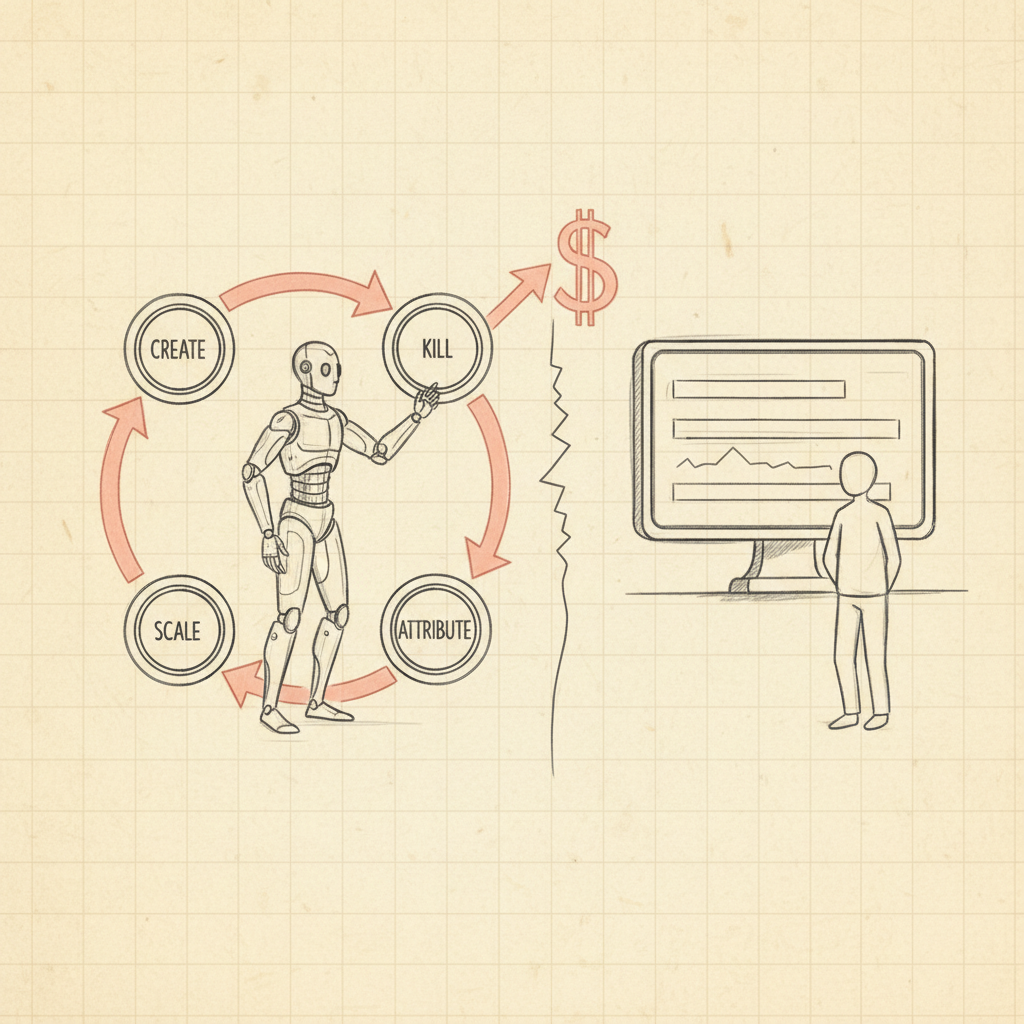
Most AI ad agents do one job: watch you lose money. A real one makes the ad, kills the losers, and scales the winners. The difference is not a feature. It is the whole point.
Paid budgets are bleeding. Lyzr reports up to 40% of ad spend slips through inefficiency, and over 70% of marketers have already hit an AI incident in their campaigns. The market is flooded with tools that call themselves "AI ad agents" but only monitor and recommend. This is the gap between watching and running, and it decides whether agentic advertising actually moves revenue or just produces prettier dashboards.
Key Takeaways
- An AI ad agent has three jobs: generate creative, monitor and bid, and target audiences. Most tools only do the middle one.
- Watching spend is not running ads. The gap is creative generation plus the kill-losers, scale-winners loop.
- A real agent optimizes to booked revenue, not clicks or ROAS vanity.
- Guardrails decide trust: auto-pause obvious waste, but humans approve big budget swings.
- Agentic advertising is the shift from manual media buying to a closed creative-to-revenue loop.
- AI Topia deploys this inside a Signal-to-Revenue system, not as a standalone tool you log into.
What Is an AI Ad Agent?
An AI ad agent is autonomous software that independently plans, launches, and optimizes paid campaigns to reach a goal. Amazon defines agentic AI as "autonomous software that independently takes actions to reach predetermined goals," and that definition draws a hard line between an agent and a tool you operate step by step. The agent decides. You set the goal.
It is not an ad generator. That distinction matters because the market conflates the two. AdCreative.ai ranks for "ai ad agent" as a pure generator: you prompt it, it makes a creative, it stops. An agent does not stop. It generates the creative, launches the campaign, watches performance, kills what loses, and scales what wins. Generation is one job inside an agent, not the whole job.
Google's AI Overview defines the category by three jobs: creative generation, monitoring and bidding, and audience targeting. All three jobs must run together to call something an agent. A tool that only does one of them, say monitoring spend and flagging waste, is a dashboard with an alert. It is useful. It is not an agent. The gap between watching and running is where most "AI ad agents" actually live. For a broader look at how paid ads fit into a full stack, see how we approach multi-agent marketing systems.
Agentic advertising is the category term for what happens when all three jobs run in a closed loop, tied to a business outcome. Not clicks. Not ROAS. In 2026, the leading definition of that outcome is booked revenue: which ad started a conversation that closed a deal. That is what separates agentic advertising from campaign automation. Automation runs the playbook you wrote. An agent rewrites the playbook based on what works.
AI Topia deploys this as a managed system inside your existing ad accounts. The agent infrastructure is ours to operate. The accounts, data, and results are yours.
The Three Jobs of an AI Ad Agent: Create, Monitor and Bid, Target
An AI ad agent has exactly three jobs: Creative Generation, Monitoring and Bidding, and Audience Targeting. Google's AI Overview names all three. Most tools only do the middle one. Understanding each job separately is how you spot what a vendor is actually selling you.
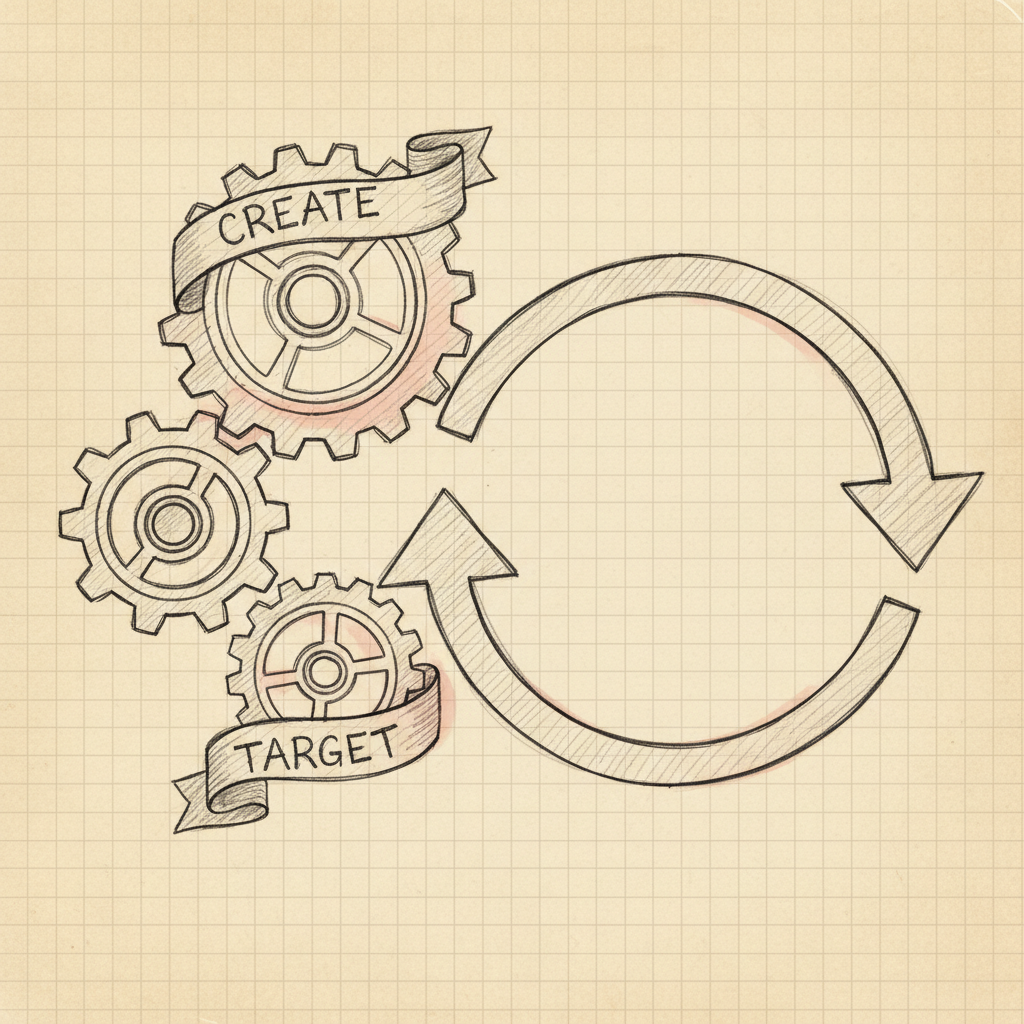
Creative Generation is the first job. The agent produces copy, image, and video variants per platform format, at volume. Fluency's Copywriter agent, for example, autonomously generates high volumes of ad assets from headlines to persuasive copy, tailored per platform spec. A human briefs the product. The agent ships 50 variants before lunch.
Monitoring and Bidding is the job most tools do. The agent watches spend in real time, adjusts pacing across hundreds of campaigns, and reallocates budget based on performance signals. Amazon's Ads Agent beta cut CPM by 18% and CPA by 16% for 65% of advertisers (Amazon internal, US, 2025). It does this by processing performance data continuously, not on a Tuesday morning check-in.
Audience Targeting is the third job. The agent scans audience pools to find top performers and personalizes ad delivery at a scale no human team can match. Coca-Cola's AI agent executed 8 million actions and delivered 828,000 personalized coupon ads in two months (Xenoss, citing Ad Age). That number is not a typo. One agent, two months, eight figures worth of targeting decisions.
Why All Three Jobs Must Run Together
Running one or two jobs in isolation produces partial results. An agent that monitors spend but does not generate creative still waits on a human to build the ad. An agent that generates creative but does not adjust targeting has no feedback loop. The three jobs compound each other: creative variants feed targeting tests, targeting signals guide bidding, and bidding data tells the creative engine what to regenerate next.
In 2026, the agents that win are the ones running all three jobs as one continuous loop rather than handing off between separate tools. That is the difference between an AI ad dashboard and an actual AI ad agent. For teams running campaigns across channels in one loop, the separation between these three jobs disappears entirely.
The gap between knowing these three jobs and deploying a system that runs all three is where most AI ad tools fall short.
The Gap: Most AI Ad Agents Only Watch Your Spend
Most tools marketed as "AI ad agents" in 2026 do exactly one thing: monitor your spend and flag problems. They do not make the creative. They do not close the loop. That distinction is where most ad budgets quietly bleed out. Lyzr reports up to 40% of ad spend slips through inefficiency, and Xenoss finds data silos and bloated supply chains waste up to 55% of total programmatic spend. Both numbers point to the same root cause: tools that watch, not tools that act.
The first category is spend-monitoring tools. Think dashboard-and-recommendation products, rule-based alert platforms, and reporting layers that surface anomalies. They tell you a campaign is underperforming. They do not pause it, kill the loser creatives, or reallocate budget. That work lands back on you.
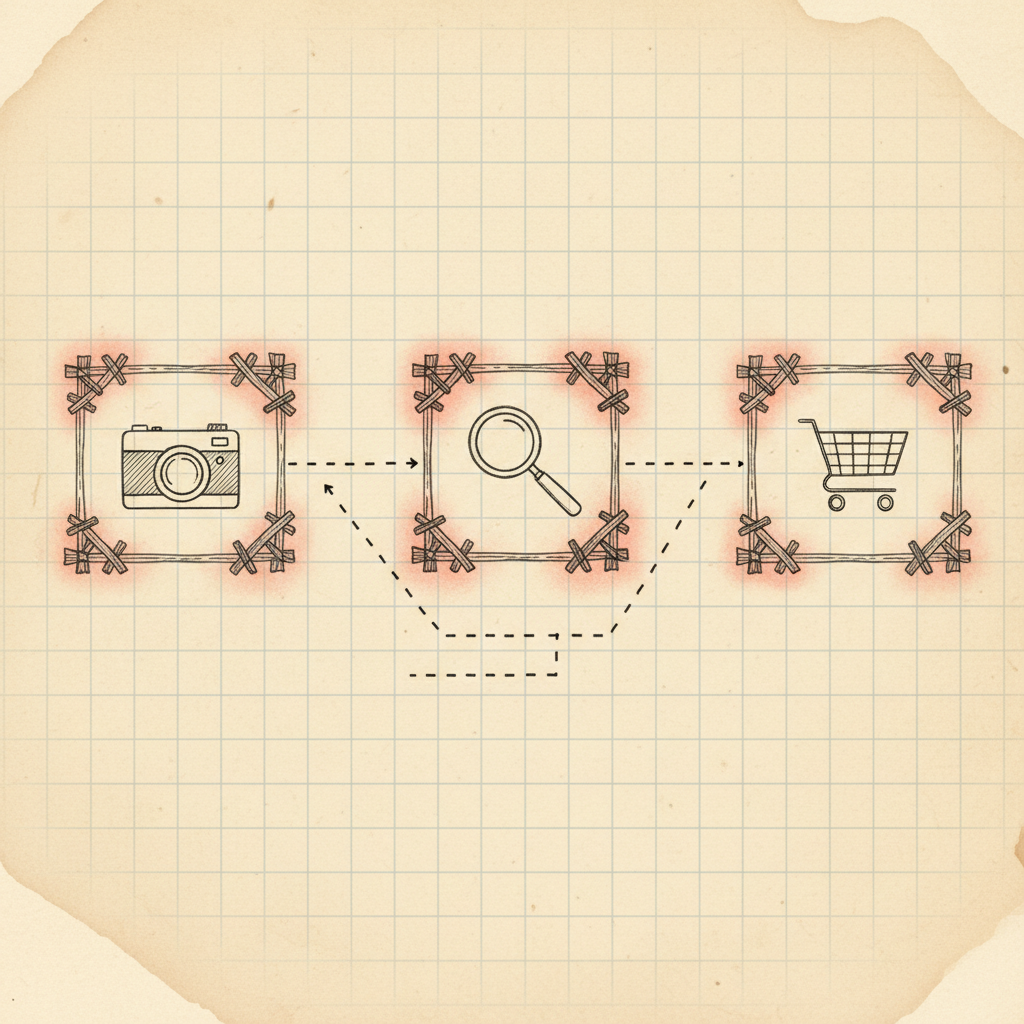
The second category is the platform built-ins. Meta Advantage+ optimizes inside Meta's ad network only. Google Performance Max works inside Google's ad network only. Amazon Ads Agent operates inside Amazon Ads only. Each one is useful inside its own walled garden. None of them connect your spend to revenue data that lives outside their platform. None of them span all three simultaneously. You can run all three and still have no picture of which ad actually started a deal.
The walled-garden problem is structural, not a product gap those platforms will fix. Their incentive is to keep you spending inside their network. Tying ad activity to your CRM, your pipeline, or your booked revenue sits outside what any single ad platform is designed to do.
The third category is the dashboards that recommend but cannot act. These are framed as "AI-powered" because they surface predictions or optimization suggestions. But a recommendation that requires a human to execute every step is not an agent. It is an alert.
Watching is not running. A tool that flags waste at 2 a.m. but waits for your approval to do anything about it until 9 a.m. has already lost seven hours of budget. The gap a real AI ad agent closes is not better monitoring. It is autonomous action on what the monitoring finds, with the creative loop and revenue attribution to back it up.
What a Real AI Ad Agent Does: Create, Kill, Scale, Attribute
A real AI ad agent runs a closed loop: generate creative, launch, measure, kill losers, scale winners, regenerate fresh variants from the winners, then attribute which ad booked revenue. That last step is what separates agentic advertising from every spend-watching dashboard on the market. See the Paid Ads agent we deploy for how this loop runs in practice.
The loop starts with creative generation. The agent produces copy, image, and video variants per platform format, all from a single brief. It launches them in parallel across Meta, Google, and TikTok. Then it watches. Not to report. To act.
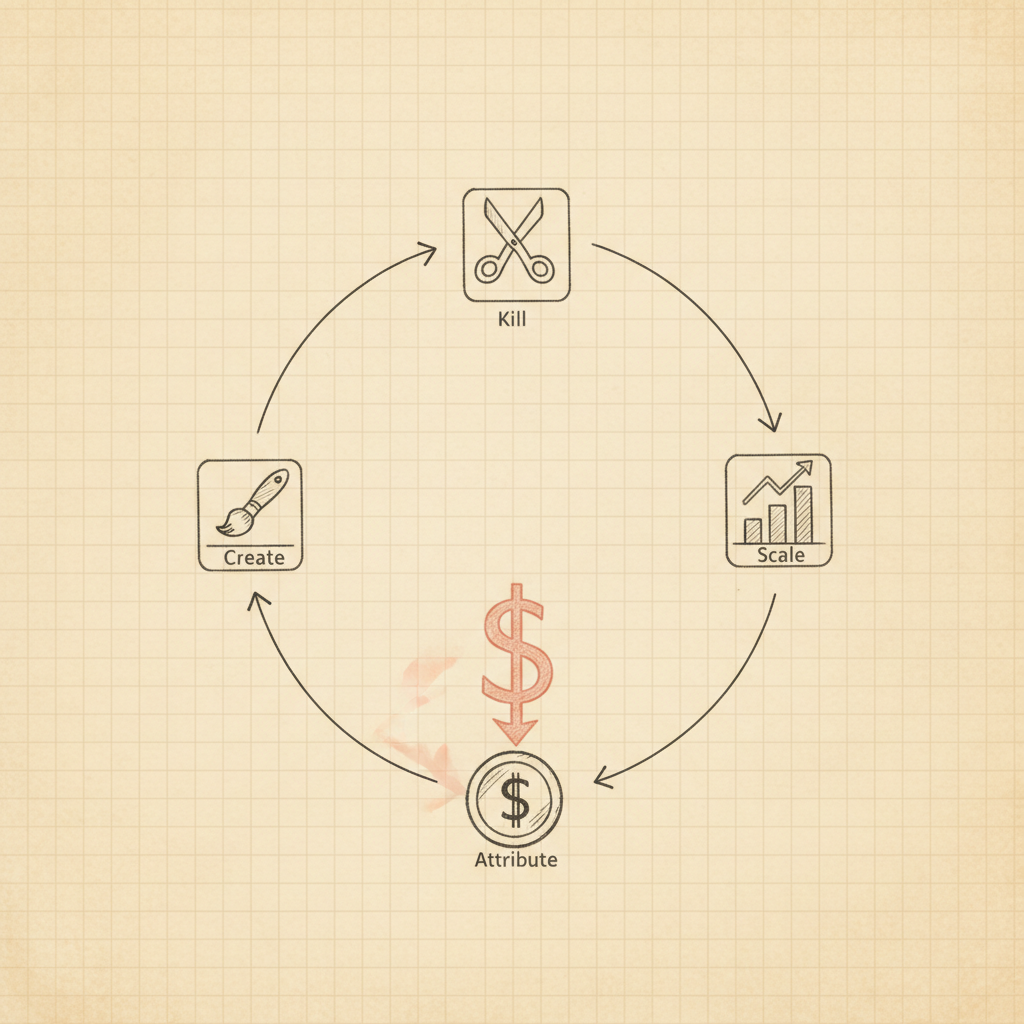
Killing losers is where the money is. Butler/Till cut cost per conversion 26% and lifted conversion rate 56% by pruning nonperforming inventory, reducing active domains by 52% (Xenoss, citing AdExchanger). That is not optimization. That is elimination. The agent does not reduce the budget on a bad ad. It kills it and moves the budget to what is working. Every ad that survives the first 48 hours has earned its spend.
Scaling winners is the other half. When a variant clears the performance threshold, the agent increases its budget. It also extracts what made the winner work: the hook, the format, the offer angle. Then it regenerates new variants built on those signals. The loop becomes self-improving. Each cycle starts smarter than the last. You can track how this compounds when ROAS is tracked against true revenue, not vanity metrics.
L'Oreal closed the creative side of this loop and saw 22% higher media efficiency and 14% more conversions in Nordic markets (Xenoss, citing Glossy.co). That result came from AI-generated creative variants feeding a live optimization loop, not from a one-time creative refresh. Creative generation and performance optimization are not separate jobs. In a real agent, they are the same loop.
The critical difference is what the agent optimizes to. Most tools optimize to clicks, ROAS, or cost per click. A real agent optimizes to booked revenue. Attribution traces which ad started a deal that closed. Budget moves toward ads that produce qualified pipeline, not ads that produce the cheapest click. This requires wiring the ad platform to your CRM, not just to your ad account.
The guardrail matters. Auto-pause on underperforming spend is safe to automate. The agent fires that without asking. Big budget scale-ups are different. When an ad clears the threshold for a major budget increase, the agent flags it for human approval before moving the money. Humans do not run the loop. Humans approve the big swings. That is the trust model that makes agentic advertising work inside a Signal-to-Revenue system.
AI Ad Agent vs Hiring a Media Buyer
A media buyer costs around $2,500 a month on average and spends roughly 10 hours a week on manual campaign tasks, according to Xenoss citing DoubleVerify data. An agent absorbs that manual loop and runs every platform at once, around the clock. The question is not which one wins. It is what each one is actually good at.
| AI Ad Agent (real) | DIY Ad Generator | Media Buyer | |
|---|---|---|---|
| Makes the creative | Yes, plus variants | Yes, one-off | Sometimes, briefs it out |
| Watches spend live | Yes, all platforms | No | Manually, business hours |
| Optimizes to | Booked revenue | Nothing | ROAS / clicks |
| Scales winners | Automatically | No | Manually |
| Guardrail on big spend | Human approves | n/a | Human is the bottleneck |
| Typical cost | Fraction of a hire | Cheap, but DIY | ~$2,500+/mo |
Does an AI ad agent replace a media buyer?
No. It replaces the repetitive execution work. Monitoring spend, pausing losers, scaling winners, generating variant batches: all of that is the agent's job. Strategy, brand positioning, and big creative bets stay with a human. A media buyer decides where to play. The agent decides how fast to run once the game starts.
The math is straightforward. A media buyer works business hours. An agent runs 24 hours a day, 7 days a week, across Meta, Google, and TikTok in a single loop. It does not get fatigued on the third week of a campaign. It does not miss a spike at 2 a.m.
But humans catch things agents miss. A brand moment that requires pulling a live ad. A competitor move that changes the whole strategy. A creative direction that data cannot surface on its own. In 2026, the best-performing teams treat the agent as the execution layer and keep a human as the judgment layer. That split is what "augment, not replace" actually means in practice.
The right framing: if you are spending more than 10 hours a week on manual campaign tasks, the agent recovers that time. If you are spending $2,500 a month on an agency retainer for execution work alone, the agent costs a fraction of that. What you keep paying a human for is the work an agent cannot do: reading the room, protecting the brand, and making calls when the data is ambiguous.
How to Deploy an AI Ad Agent Safely
Most teams are not ready to hand an agent full control of live ad budgets. That is the right instinct. The fix is not to avoid agents. It is to split every action into two buckets: what auto-fires and what needs sign-off.
Are marketing teams actually ready to let agents touch live budgets?
The anxiety is justified by data. Xenoss reports that over 70% of marketers have already experienced AI incidents, including hallucinations, bias, and off-brand creative. Fewer than 35% plan to increase investment in AI governance in 2026. That gap is where campaigns blow up. The remedy is a sharper ruleset from day one, not a softer agent. Review human-in-the-loop checkpoints before you write your first rule.
The core rule is simple: auto-pause obvious waste; humans approve big budget swings. Killing a $12 CPL ad bleeding spend at 3x the cost target is safe to automate. Moving $20,000 of daily budget to a new winner is not. Amazon's own Ads Agent handles this by summarizing all suggested changes and waiting for human approval before any update executes. Copy that model.
Wire ad clicks into your funnel before the agent goes live. A click that does not convert should hand off to a lead acquisition and qualification layer, not disappear inside the ad platform. Teams that connect this cross-channel handoff live in days, not months because the agent infrastructure already exists. That is how paid spend becomes pipeline instead of traffic.
The safe deployment stack has four parts. Define what auto-fires: pause underperformers, adjust bids within a capped range, swap creative inside an approved set. Define what needs approval: any single-day budget increase above a ceiling, any new audience segment outside the approved set. Connect every click to a CRM or qualification agent. Run a weekly human review of agent actions. Across our client engagements, teams that set up this stack build full trust in the agent within two weeks.
AI Topia deploys this as a fully managed service. You do not configure rules in a dashboard. We build and operate the agents we deploy inside your ad accounts. You own the accounts, data, and results. The Paid Ads agent in our stack runs the create-kill-scale-attribute cycle with approval gates built in from launch day. That is the difference between deploying an agent and deploying a system built to last.
Frequently Asked Questions
Can an AI agent make an ad?
Yes. Modern AI ad agents generate ad copy, images, and video variants tailored to each platform format. The stronger ones produce dozens of variants from a single brief. But generating an ad is only one job. A full agent also launches the creative, monitors performance, kills the losers, and scales the winners. Generation without that loop is an ad generator, not an agent.
Is it legal to use AI for ads?
Yes, with conditions. Each ad platform sets its own policy on AI-generated creative, and some regions require disclosure when content is AI-made. Trademark, likeness, and copyright rules still apply to anything the agent produces. The safe path is a human approver who signs off on creative before it goes live, plus a check against each platform's current AI policy. Treat the agent as the producer, not the legal owner.
Does an AI ad agent replace a media buyer?
No. It replaces the repetitive execution work: monitoring spend, pausing losers, scaling winners, and producing variant batches. Strategy, brand positioning, and big creative bets stay with a human. The agent is the execution layer that runs around the clock across platforms. The human is the judgment layer that decides where to play and when to pull a live ad. Augment, not replace.
Which platforms can an AI ad agent run on?
Meta, Google, and TikTok are the common three. A real AI ad agent runs across all of them in one loop, rather than inside a single walled garden like Meta Advantage+ or Google Performance Max. Cross-platform coverage is what lets the agent compare performance and move budget to the best channel, not just the best ad inside one network.
Will an AI ad agent blow my budget?
Not if it has guardrails. The safe model auto-pauses obvious waste but holds big budget increases for human approval. Before you deploy, ask any vendor exactly what fires automatically and what needs sign-off. Amazon's Ads Agent, for example, summarizes every change and waits for approval before acting. If a tool cannot tell you where that line sits, it is not ready for your live budget.
What is the difference between an AI ad agent and an AI ad generator?
An ad generator makes a creative once and stops. You prompt it, it returns an image or copy, and the work is done. An agent runs the full loop: create, launch, monitor, kill, scale, and attribute to revenue. Generation is a single job inside the agent. If a tool only produces creative, it is a generator. If it acts on performance, it is an agent.
How is agentic advertising different from Performance Max or Advantage+?
Performance Max and Advantage+ optimize inside one ad platform using that platform's data. Agentic advertising spans platforms, generates the creative, and ties spend to your own revenue data outside any single walled garden. The difference is scope and outcome: a built-in optimizes clicks inside its network, while an agent optimizes booked revenue across your whole funnel.
The Bottom Line
The market is full of tools that watch your ad spend and call themselves agents. Watching is not running. A real AI ad agent makes the creative, launches it, kills the losers, scales the winners, and traces which ad booked revenue, all in one loop. The walled-garden built-ins cannot do this because they optimize inside their own network and never see your pipeline. The dashboards cannot do this because they recommend instead of act.
Agentic advertising works when the loop is closed and the guardrails are clear: auto-pause waste, humans approve the big swings. That is how paid spend turns into pipeline instead of traffic. AI Topia deploys this as a fully managed Paid Ads agent inside your Signal-to-Revenue system, wired to your real revenue from day one.
Want to see what a real ad agent does with your accounts? Book a Build Call.
Ready to Automate Your Business?
Book a 30-minute call to discuss how AI can transform your Marketing, Sales, or Operations.
Book a Call