
HubSpot Competitors 2026: 15 Tools vs 1 Agent Layer

Every name on this list is another seat-priced tool you still have to operate. The best HubSpot competitors in 2026 are EngageBay and Zoho for an all-in-one stack, Pipedrive for sales, and ActiveCampaign or Brevo for marketing automation. Each one is cheaper than HubSpot, and each one still hands you the same job: log in, build the workflows, write the emails, and run the campaigns yourself.
That is the part the listicles skip. A cheaper license does not remove the labor. So this guide does two things. First, it ranks the real tools by category, with verified 2026 pricing, so you can pick the right software for your team. Then it names the alternative nobody puts on these lists: an agent layer that does the work the tools only enable. If you run a lean B2B SaaS team, that distinction is the whole game.
Key Takeaways
- The best HubSpot competitors in 2026 are EngageBay and Zoho for all-in-one, Pipedrive for sales, and ActiveCampaign or Brevo for email and automation.
- HubSpot's real cost problem is the Starter-to-Professional cliff: about $100/mo jumps to $890/mo, plus a $3,000 onboarding fee.
- Every tool on this list is still seat-priced software you have to staff and operate yourself.
- A Pipedrive plus ActiveCampaign stack runs $3,600 to $6,000 a year versus $18,000 to $22,000 for comparable HubSpot tiers.
- Free tiers exist (EngageBay, Brevo, Zoho), but the labor of running the tool never gets a free tier.
- The #1 alternative is not another tool. An agent layer does the marketing work the tools only enable.
HubSpot Competitors at a Glance (2026)
Here is the fast version. Most HubSpot alternatives fall into three buckets: all-in-one suites that bundle CRM and marketing, sales-first CRMs, and email and automation platforms. The right pick depends on which job you are actually paying for.

| Tool | Category | Entry price (2026) | Best for |
|---|---|---|---|
| EngageBay | All-in-one | $14.99/user/mo (free for 15 users) | Budget-led SMB teams |
| Zoho CRM | All-in-one | $30/user/mo (free for 3) | Customization and ecosystem |
| ActiveCampaign | Automation | $29/mo | Advanced email workflows |
| Pipedrive | Sales CRM | $14 to $79/user/mo | Sales-led pipelines |
| Salesforce | Enterprise CRM | Custom, high | Large, complex orgs |
| Close | Sales CRM | Per-seat | High-velocity calling |
| Brevo | $25/mo (free tier) | Volume-based sending | |
| Mailchimp | $13/mo | Simple broadcast email |
Read the table and one thing stands out. Every row is a license you operate. None of them ship the work. That is why our AI CMO platform sits in a different column entirely: it is not another seat in the stack, it is the layer that runs the stack. Hold that thought while we go category by category, because the price you see is never the price you pay once you add a person to run it.
Best All-in-One Alternatives
If you want one tool to hold contacts, email, and basic automation, three names lead in 2026.

EngageBay is the budget pick. The All-in-One plan starts at $14.99 per user a month with full marketing automation, and the forever-free CRM supports 15 users and 500 contacts. There are no surprise pricing cliffs as you scale, which is the exact opposite of HubSpot's model. For a small team that wants HubSpot-shaped features without HubSpot math, it is the obvious first stop.
Zoho CRM is the customization pick at $30 per user a month, with a free plan for up to 3 users. Zoho wins when you value deep configuration and a wide product ecosystem you can wire together. The tradeoff is that more flexibility means more setup, and setup is labor.
ActiveCampaign starts at $29 a month and leans toward automation-heavy teams. At that entry price you get conditional logic, branching workflows, lead scoring, and site tracking, features HubSpot locks behind its Professional tier. We break the head-to-head down further in HubSpot vs ActiveCampaign in detail.
The pattern across all three: you save real money on the license, then you hire or assign someone to build the workflows, write the sequences, and keep the data clean. The all-in-one tool consolidates the software bill. It does not consolidate the work.
Best for Sales / CRM
For sales-led teams, the question is pipeline visibility and rep speed, not marketing breadth.
Pipedrive is the default answer. In 2026 it runs $14 to $79 per user a month across four plans: Lite at $14, Growth at $39, Premium at $59, and Ultimate at $79 on annual billing. Watch the add-ons, though. Email campaigns start at $16 a month and web visitor tracking at $49 a month on top of the seat price. Pipedrive is clean, fast, and built so reps actually update it.
Salesforce competes at the enterprise end. It out-customizes everyone and its ecosystem is unmatched, but it is heavier and pricier, and it usually needs an admin or an implementation partner to run well. For most B2B SaaS founders under a few hundred people, it is overkill. If you are weighing it anyway, see HubSpot vs Salesforce.
Close rounds out the category for high-velocity teams. It bakes calling, SMS, and email into the CRM so reps live in one window, which suits outbound shops that dial all day.
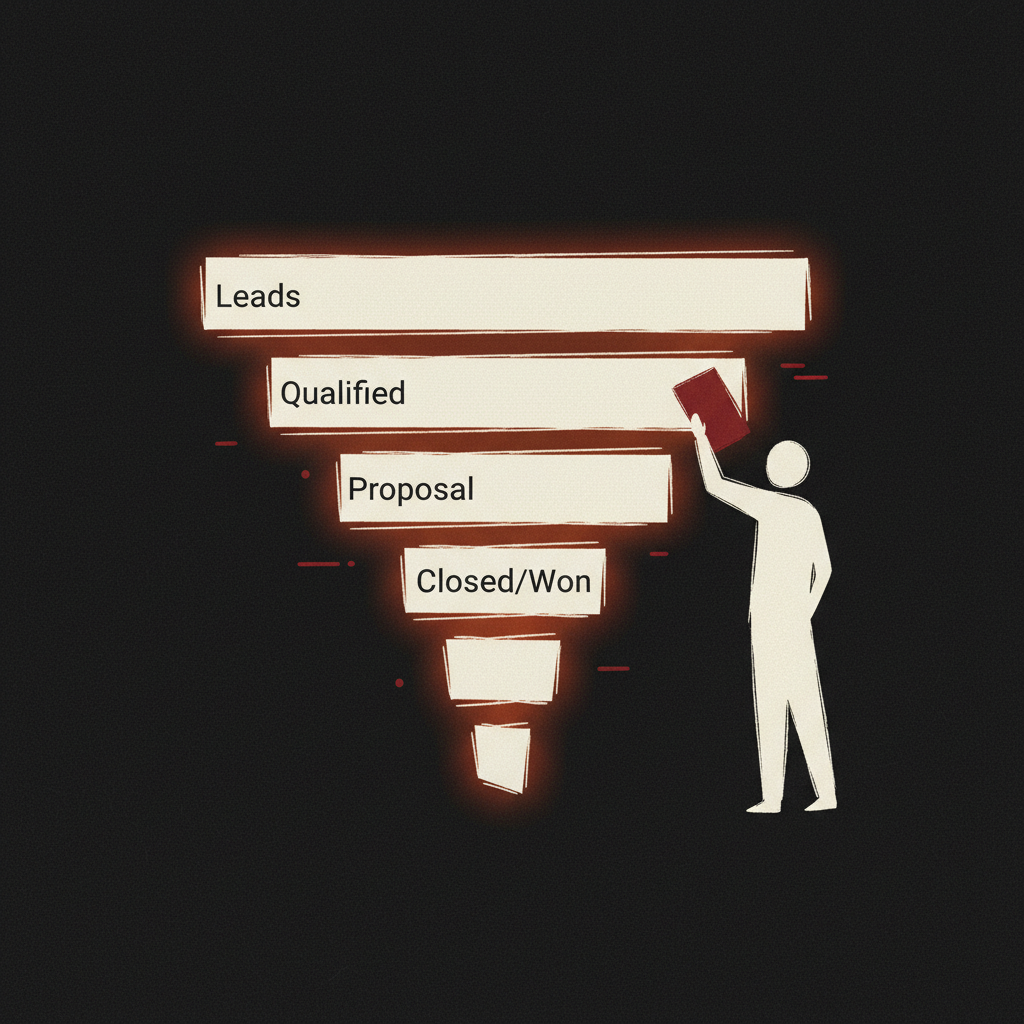
Notice the shape again. A great CRM tells you what to do next. It does not do it. Someone still writes the follow-up, builds the cadence, and books the call. The seat price buys the dashboard. The headcount runs the motion.
Best for Marketing Automation / Email
When email is the engine, deliverability and cost-per-send decide the winner.

ActiveCampaign leads for depth. From $29 a month you get an automation builder with branching, lead scoring, and site tracking, the kind of logic that usually costs far more elsewhere. It is the pick when your funnel needs real conditional flows, not just broadcasts.
Brevo is the volume pick. It bills on email volume, not contact count, starting at $25 a month for 20,000 emails, with a free plan covering 15,000 emails a month to 2,500 subscribers. If you have a big list but send in bursts, volume-based pricing can be dramatically cheaper than contact-based plans.
Mailchimp is the simple-broadcast pick. Essentials starts at $13 a month for 500 contacts, Standard at $20, and Premium at $350 for 10,000 contacts. Every paid plan scales by total contact count, so costs climb as your list grows whether or not you email everyone. Its strength is ease of use for straightforward newsletters.
The cost trap here is quiet. Contact-based pricing punishes list growth, and the better automation you buy, the more skilled the person you need to wield it. Deliverability is the same story: a strong platform protects your sender reputation, but someone still has to warm domains, segment lists, and write copy that earns the open.
Why People Leave HubSpot
HubSpot is a good product. People do not leave because it is bad. They leave because of the math.
The headline reason is the cost cliff. The jump from Starter near $100 a month to Professional at roughly $890 a month is about a 44x increase, and it triggers the exact moment you need real work done: multi-step automations, proper A/B testing, custom reporting, or lead scoring. The features you actually wanted live on the far side of that cliff.
Then come the onboarding fees. The Professional tier carries a mandatory $3,000 onboarding charge that is not optional, and for complex mid-sized teams the standard onboarding is a coaching service, not an implementation service. You pay to be taught how to do the setup yourself.
Customization and contract terms finish the job. Most high-value features are tier-gated, Professional and Enterprise plans require annual commitments, and contact-tier auto-upgrades can bill mid-contract with no grace period. The full breakdown lives in HubSpot's real pricing.

Stack it up and the contrast is stark. A Pipedrive plus ActiveCampaign setup delivers comparable function for $3,600 to $6,000 a year versus $18,000 to $22,000 for the matching HubSpot tiers. But here is the part nobody says out loud: switching tools only fixes the license. The reason people leave HubSpot is cost, and most of the cost was never the software. It was the team running it.
The #1 Alternative Nobody Lists: An Agent Layer, Not Another Tool
Go back through every option above. EngageBay, Zoho, Pipedrive, Salesforce, Brevo, Mailchimp, ActiveCampaign. Each one is a better-priced place to do the same work by hand. None of them remove the hand.

That is the alternative nobody puts on these lists. Not another tool, but an agent layer that sits over your stack and does the work the tools only enable. The CRM still holds the data. The email platform still sends. But the planning, the writing, the publishing, and the reporting, the labor you used to staff, runs as an agent layer instead of a job description. This is the category our AI marketing agents live in.
Here is the reframe in one table.
| Approach | Typical tools | What you still do | AI CMO |
|---|---|---|---|
| All-in-one suite | EngageBay, Zoho | Build every workflow and write every email by hand | Agent builds and runs the workflows for you |
| Point tools | Pipedrive, Close | Stitch tools together and keep data in sync | Agent operates across your tools as one layer |
| Email platform | Brevo, Mailchimp | Segment lists, warm domains, write the copy | Agent plans, writes, and ships the sends |
| The human operator | Marketing hire or agency | Pay salary or retainer to run the stack | Agent does the operating work, no headcount cliff |
| Total cost | $18,000 to $22,000/yr plus salary | License plus a person to run it | Pay for outcomes, not seats you have to staff |
Read the last column. The other tools cap out at handing you a better dashboard. The agent layer changes what you are buying: not a seat, but the work itself. For a lean B2B SaaS team, that is the difference between paying for software you have to operate and paying for marketing that gets done.
Frequently Asked Questions
What is the best HubSpot alternative?
It depends on the job. For an all-in-one stack at a low price, EngageBay starts at $14.99 per user a month. For sales-led teams, Pipedrive runs $14 to $79 per user. For deep email automation, ActiveCampaign starts at $29 a month. But the best alternative for a lean B2B SaaS team is not another tool at all. It is an agent layer that does the marketing work the tools only enable, so you stop paying for seats you have to staff.
Is there a free HubSpot alternative?
Yes. EngageBay offers a forever-free CRM for up to 15 users with 500 contacts. Zoho CRM is free for up to 3 users. Brevo has a free plan with 15,000 emails a month to 2,500 subscribers. The catch is that the free tier covers the license, never the labor. You still have to operate the tool, build the automations, and run the campaigns yourself, which is where the real cost always hides.
Why do companies leave HubSpot?
The cost cliff. The jump from Starter near $100 a month to Professional at $890 a month is roughly a 44x increase, and it triggers the moment you need A/B testing, sequences, lead scoring, or custom reports. Add a mandatory $3,000 onboarding fee and annual lock-in, and most growing teams hit a budget wall. Customization limits and mid-contract contact-tier upgrades push the rest of them out the door.
Is ActiveCampaign a good HubSpot competitor?
Yes, for marketing automation specifically. ActiveCampaign starts at $29 a month and ships conditional logic, branching workflows, lead scoring, and site tracking at that entry price, features HubSpot gates behind its $890 Professional tier. It is weaker as a full CRM, so sales-heavy teams often pair it with Pipedrive. That stack runs $3,600 to $6,000 a year versus $18,000 to $22,000 for comparable HubSpot tiers.
Is Salesforce a HubSpot competitor?
Yes, at the enterprise end. Salesforce competes with HubSpot's Enterprise tier on CRM depth, customization, and ecosystem, but it is heavier and pricier to run, and it usually needs an admin or implementation partner. For most B2B SaaS founders under a few hundred employees, Salesforce is overkill. The real question is not which CRM you pick. It is how much of the work you still want to do by hand.
What replaces the whole HubSpot stack, an AI CMO?
An AI CMO platform replaces the operating layer, not just the software. Instead of buying an all-in-one tool, a CRM, and an email platform and then staffing people to run them, an agent layer sits over your stack and does the work the tools only enable: planning, writing, publishing, and reporting. You keep your data tools and stop paying for the human hours to operate them, which is the cost that drove you off HubSpot in the first place.
The Real Comparison Is Not Tool vs Tool
Pick any tool on this list and you will save money against HubSpot. EngageBay and Zoho cut the all-in-one bill. Pipedrive sharpens sales. ActiveCampaign and Brevo run email for a fraction of the Professional tier. Those are real wins, and if you just need cheaper software, take them.
But notice what none of them changed. After you switch, you are still the one building the workflows, writing the emails, and running the campaigns. The license got cheaper. The labor did not move. That is why most teams that leave HubSpot end up frustrated again a year later: they fixed the bill and kept the bottleneck.
The agent layer is the only option on this page that touches the bottleneck. It does the work the tools enable, so a lean team operates like a full department without the headcount cliff. Stop comparing seats. Compare who actually does the work.
Book a call with us to see how an AI CMO replaces the whole stack: https://calendly.com/joon-getaitopia/30min
Ready to Automate Your Business?
Book a 30-minute call to discuss how AI can transform your Marketing, Sales, or Operations.
Book a Call