
HubSpot vs ActiveCampaign 2026: Automation Tooling vs Autonomous Execution
Both ship automation. Neither ships the marketer who runs it. If you only need the verdict: ActiveCampaign wins on price and deliverability for most lean B2B SaaS teams, while HubSpot wins on all-in-one scope if you want CRM, sales, and service under one roof and can absorb the cost. ActiveCampaign starts near 19 dollars a month. HubSpot Marketing Hub Professional starts at 800 dollars a month plus a mandatory 3,000 dollar onboarding fee in 2026.
But the real story is the one neither comparison post tells you. Both tools hand you an empty automation canvas and a blinking cursor. They automate the sending. They do not decide what to send, to whom, or why. That decision is still a human job, and that human is the most expensive line item in your marketing stack. This teardown covers the head-to-head, then the AI CMO platform option that closes the gap both leave open.
Key Takeaways
- ActiveCampaign starts near 19 dollars a month. HubSpot Marketing Hub Professional starts at 800 dollars a month plus a mandatory 3,000 dollar onboarding fee.
- ActiveCampaign hit 94.2 percent deliverability in 2026 testing. HubSpot landed at 77.7 percent, ranking 12th out of 16 tools.
- Both tools automate the send. Neither tool decides what to send, to whom, or why. That decision is still a human job.
- Automation means a human designs every branch in advance. Autonomous means an agent reads the data and decides the next move on its own.
- Picking either tool still leaves you hiring or renting a marketer to run it. The license is not the operator.
- An AI CMO is the third option. It does not just run the workflow. It decides the workflow, then executes it.
HubSpot vs ActiveCampaign at a Glance (2026)
Here is the fast verdict. ActiveCampaign is email and automation first, with a sales CRM bolted on. HubSpot is a full customer platform: marketing, sales, service, content, and operations hubs that share one database. ActiveCampaign is a precision tool. HubSpot is the whole workshop, priced like one.

| Question | ActiveCampaign | HubSpot |
|---|---|---|
| Entry price (2026) | ~19 dollars per month | 800 dollars per month plus onboarding |
| Core strength | Email automation and deliverability | All-in-one CRM suite |
| Best for | Lean B2B SaaS, email-led growth | Larger teams wanting one platform |
| Setup cost | None | 3,000 dollar mandatory onboarding |
ActiveCampaign is for the founder who wants strong automation without a procurement process. You can be sending in an afternoon. HubSpot is for the team that has outgrown point tools and wants one source of truth across departments, and has the budget and headcount to justify it. Most early and mid stage B2B SaaS companies do not need the full HubSpot suite in 2026. They need reliable sends, clean automation, and a CRM that does not get in the way. Neither tool, though, replaces the person who decides the strategy behind the sends. That is the gap we keep returning to. For founders running a lean marketing team, the right question is not which tool, but who operates it.
Pricing: Transparent vs Hidden
ActiveCampaign pricing is legible. The Starter plan is about 15 dollars a month billed annually, or roughly 19 dollars month to month, for 1,000 contacts. It scales with your contact count: Starter at 10,000 contacts runs about 149 dollars a month in 2026. There is no free plan, but there is a 14 day trial. You can read the bill before you sign it.
HubSpot pricing is a stack. Marketing Hub Professional is 800 dollars a month on the annual plan, and that is before the mandatory 3,000 dollar one time onboarding fee that every Professional customer pays, even teams that already know how to run marketing operations. The plan includes three seats, with each additional seat at 45 dollars a month, and 2,000 marketing contacts by default. Add contacts, add seats, add other hubs, and the real number climbs fast. We broke down the real cost of HubSpot Marketing Hub separately because the sticker price and the invoice rarely match.
The honest framing for 2026: ActiveCampaign costs what it says. HubSpot costs what it says plus seats plus onboarding plus contact overages plus the hubs you will be upsold. For a lean team counting runway, that difference is not a rounding error. It is the difference between one tool and a second hire. And in both cases, the license buys software, not a strategist.
Automation Builders Compared
Both platforms ship genuinely good visual automation builders, and this is where the comparison gets close. ActiveCampaign's builder is drag and drop, with conditional branching, goal tracking, and native email plus SMS in one flow. It is fast to learn and hard to outgrow for email led teams. HubSpot's workflow tool is broader, triggering off any object in the CRM, enrolling contacts based on deal stage, ticket status, or custom properties, and orchestrating across the full suite.

If your automation is email centric, ActiveCampaign is tighter and cheaper. If your automation needs to reach across sales and service objects in one connected system, HubSpot's reach is real and hard to match. Cross channel, ActiveCampaign covers email and SMS natively. HubSpot covers email, plus paid ads, plus on site behavior, plus more, inside one database.
Here is the part the feature charts skip. Both builders are empty until a human designs every branch. Someone has to decide the trigger, write the conditions, draft the emails, set the wait times, and define what happens when a contact does not open. The tool executes that logic flawlessly and forever. But it never wrote the logic, and it never revises the logic when the numbers change. In 2026, that design work is still 100 percent human labor on both platforms. The automation is the easy part. Deciding what to automate is the job.
Deliverability + Reporting
Deliverability is where the gap is widest and most measurable. In EmailToolTester's 2026 testing, ActiveCampaign hit 94.2 percent inbox placement, ranking first out of 16 tools. HubSpot landed at 77.7 percent, ranking 12th. That is a roughly 16 point gap, which on a 20,000 contact send is about 3,200 more emails reaching the inbox with ActiveCampaign. For an email led B2B SaaS, that is pipeline.
One caveat worth stating plainly: deliverability tests vary by methodology. A separate study put the two much closer, with HubSpot slightly ahead. The honest read is that ActiveCampaign is consistently strong on deliverability and built its reputation on it, while HubSpot's results are more variable. If inbox placement is your top concern in 2026, ActiveCampaign is the safer bet.
On reporting, HubSpot pulls ahead. Its dashboards span the full funnel, attribution across channels, revenue reporting tied to deals, and custom report building that ActiveCampaign cannot match at the same depth. ActiveCampaign reports well on campaigns, automations, and contact behavior, which is enough for most email led teams. HubSpot reports on the whole business. But richer dashboards still need a human to read them, draw a conclusion, and act. A chart is not a decision.
Automation vs Autonomous: The Word Both Hide Behind
This is the wedge. Both tools sell automation. Neither sells autonomy. The words sound alike and mean opposite things about who does the thinking.
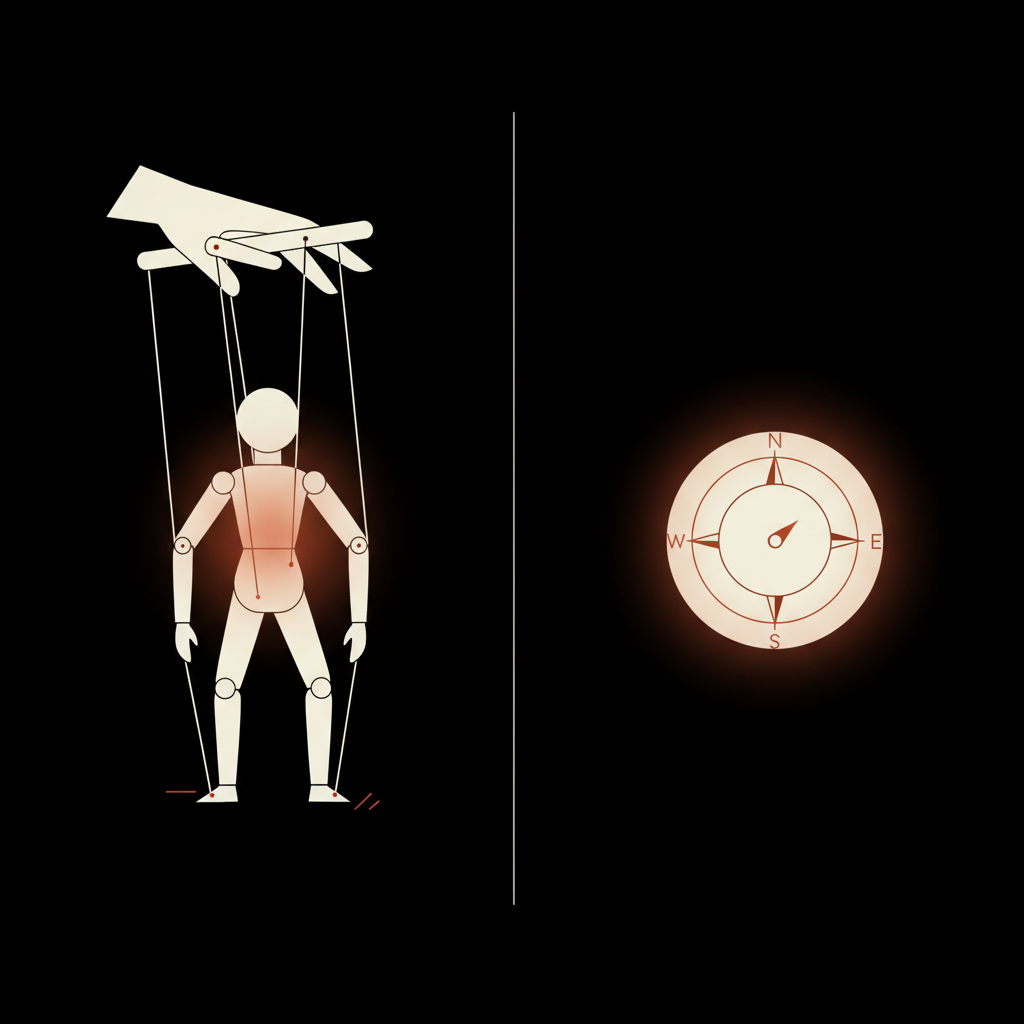
Automation means a human designs every branch in advance. You decide the rules, the tool follows them. If a contact opens the email, send B. If they click, notify sales. If they go quiet for 30 days, enter the win back flow. The marketer is the brain. The software is the hands. It is faster than manual work, but it never has an original thought, and it never adapts beyond the branches you drew. When the market shifts, the automation keeps running yesterday's plan until a human rewrites it.
Autonomous means an agent reads the data and decides the next move on its own. It does not wait for you to draw the branch. It looks at who engaged, what converted, what stalled, and it chooses the segment, writes the message, picks the send time, and adjusts the plan as results come in. The human sets the goal. The agent figures out how to hit it. This is the difference between a power drill and a carpenter. ActiveCampaign and HubSpot sell you a very good drill. That is the spirit behind AI-driven marketing automation: not faster button pushing, but a system that decides. Both 2026 platforms are firmly on the automation side of that line. They make the human faster. They do not replace the human's judgment. And the judgment is what you are actually paying a marketer for.
The Third Option: An AI CMO That Runs the Workflows
So here is the real choice in 2026. You can buy ActiveCampaign and a marketer to run it. You can buy HubSpot and a marketer, or a team, to run it. Or you can deploy an AI CMO that is the operator, not just the tooling. It decides the strategy, builds the workflows, writes the copy, runs the sends, reads the results, and revises, on its own, against the goal you set.

An AI CMO does not compete with ActiveCampaign or HubSpot on send infrastructure. It sits above them as the orchestration layer, the brain both tools are missing. These are the AI marketing agents that turn an empty automation canvas into a running marketing department. Here is the three way picture.
| Capability | HubSpot | ActiveCampaign | AI CMO |
|---|---|---|---|
| Entry price | 800 dollars per month plus onboarding | ~19 dollars per month | Replaces the operator, not just the tool |
| Automation | Broad, full suite | Strong, email and SMS | Decides and builds the automation |
| Who designs the workflow | A human you hire | A human you hire | The agent designs it |
| Deliverability | ~78 percent (2026 test) | ~94 percent (2026 test) | Routes through best in class infrastructure |
| Decides what to send | A human | A human | The agent decides |
| Total operating cost | License plus a marketer or team | License plus a marketer | One system, no separate operator |
The point is not that ActiveCampaign or HubSpot is bad. ActiveCampaign is excellent and cheap. HubSpot is powerful and broad. The point is that both are tools that wait for an operator. For a lean B2B SaaS founder in 2026, the most expensive part of the stack was never the license. It was the person you had to hire to run it.
Frequently Asked Questions
Is ActiveCampaign cheaper than HubSpot?
Yes, by a wide margin at entry and mid tiers. ActiveCampaign starts around 19 dollars a month for 1,000 contacts, while HubSpot Marketing Hub Professional starts at 800 dollars a month plus a mandatory 3,000 dollar onboarding fee in 2026. Even as ActiveCampaign scales with contact count, it stays far below HubSpot's stacked seat, contact, and hub pricing. For most lean B2B SaaS teams, ActiveCampaign is the dramatically lower cost option, both at signup and over the first year.
Which has better deliverability?
ActiveCampaign, in the most cited 2026 testing. EmailToolTester measured ActiveCampaign at 94.2 percent inbox placement, ranking first of 16 tools, with HubSpot at 77.7 percent, ranking 12th. One competing study put them closer, with HubSpot marginally ahead, so methodology matters. But ActiveCampaign has built its reputation on deliverability and posts consistently strong numbers. If inbox placement is your top priority, ActiveCampaign is the safer choice in 2026.
Is ActiveCampaign a CRM?
Partly. ActiveCampaign includes a sales CRM with deals, pipelines, and lead scoring, but the platform is email automation first. The CRM is capable for small sales teams and integrates tightly with the automation engine, yet it is not as deep as HubSpot's dedicated Sales Hub. If your priority is email led marketing automation with a functional CRM attached, ActiveCampaign fits. If you need a heavy, multi team sales and service CRM as the core, HubSpot is the stronger fit.
Can I migrate from HubSpot to ActiveCampaign?
Yes. Contacts, lists, and email content migrate cleanly, and ActiveCampaign offers free migration help on most plans. Automations usually need to be rebuilt rather than copied, since the builders differ. CRM data such as deals and custom properties requires careful mapping to avoid losing structure. Plan for a few days of setup and testing. Most lean teams complete a HubSpot to ActiveCampaign migration in under two weeks, and the monthly savings often pay back the effort within the first billing cycle.
Which is better for a small B2B SaaS?
For most small B2B SaaS teams, ActiveCampaign wins on cost and deliverability. It delivers strong automation, near 94 percent inbox placement in 2026 testing, and a workable CRM at a fraction of HubSpot's price. HubSpot makes sense only when you genuinely need the full suite across marketing, sales, and service and can fund it. But neither tool runs itself. The deeper question for a lean team is whether you hire someone to operate the tool or deploy an AI CMO that operates it for you.
What replaces both, an AI CMO?
An AI CMO replaces the operator both tools leave to a human. ActiveCampaign and HubSpot automate the sends but still need a marketer to decide strategy, design workflows, and revise based on results. An AI CMO does that thinking and the doing: it sets segments, writes copy, runs sends through strong infrastructure, reads the data, and adapts on its own against your goal. It does not replace send infrastructure. It replaces the missing operator that makes that infrastructure useful.
The Bottom Line for 2026
ActiveCampaign and HubSpot are both good answers to the wrong question. The question is not which tool automates better. ActiveCampaign is cheaper and lands more email in the inbox. HubSpot is broader and reports across the whole business. Pick by budget and scope. But whichever you pick, you are buying an empty canvas and a license, not a marketer. The automation runs exactly the plan a human drew, forever, until that human draws a new one.
The real 2026 upgrade is not a better drill. It is a carpenter who shows up, reads the job, and builds. An AI CMO is the operator layer that decides what to send, runs it through tools like these, and revises as the numbers come in. That is the leverage a lean team actually needs. Book a call with us to see how an AI CMO runs the workflows for you: https://calendly.com/joon-getaitopia/30min
Ready to Automate Your Business?
Book a 30-minute call to discuss how AI can transform your Marketing, Sales, or Operations.
Book a Call