
AI CMO for Marketing Agencies: Complete Guide (2026)
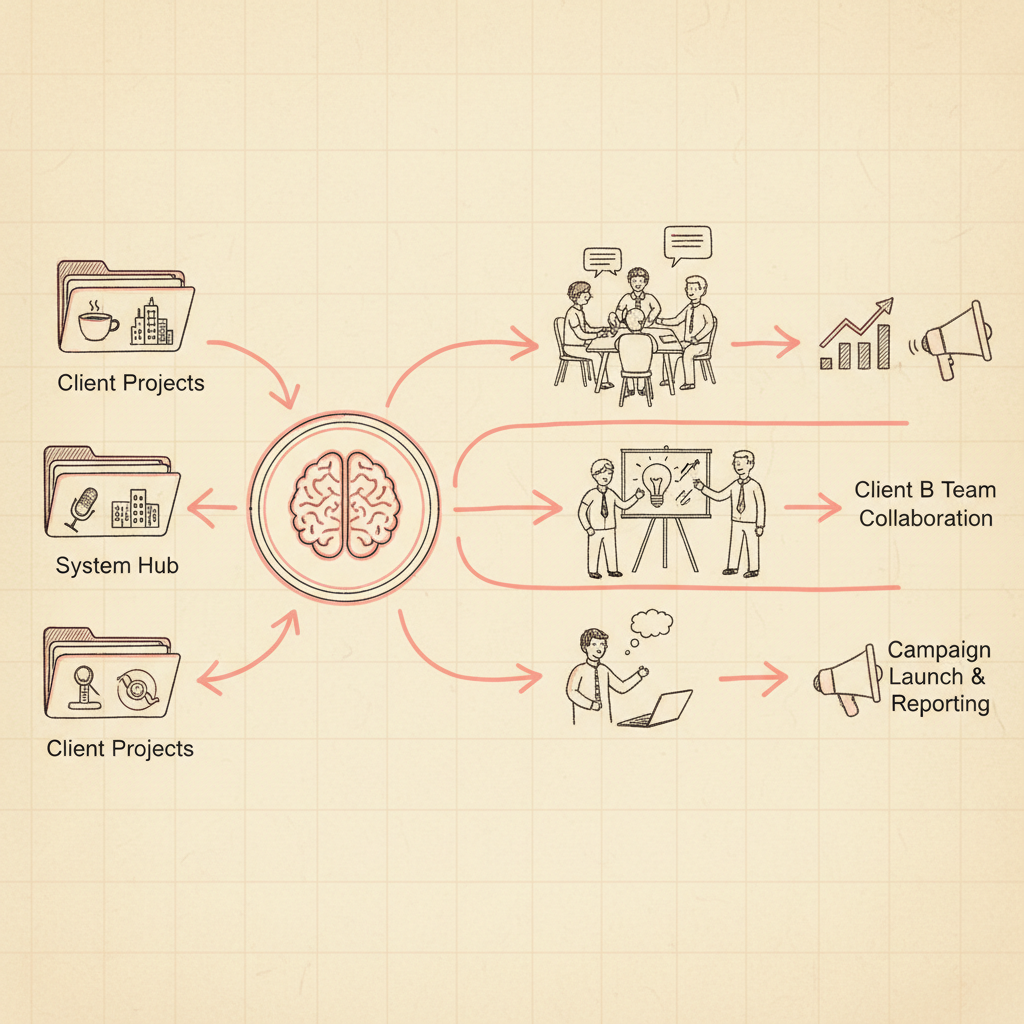
Every AI CMO tool on the market was built for a solo founder. Here is what agencies actually need.
TL;DR — Key Takeaways
- AI CMO tools built for solo founders fail at agency scale — the core architecture is different
- An agency-ready AI CMO needs multi-client isolation, white-label outputs, and per-client brand voice
- The agencies winning in 2026 are treating AI as a Cowork team, not a single automation tool
- AEO (getting cited in ChatGPT and Gemini) is the new SEO — and most agency tools ignore it
- Pricing models matter: per-seat tools get expensive fast; per-client models scale with revenue
What Is an AI CMO and Why Agencies Need a Different Version
An AI CMO is a system of AI agents that handles marketing strategy, content production, SEO, and distribution. For a solo founder, that means automating their own brand. For an agency, it means running all of that across 5, 10, or 20 client accounts at once — and that requires a completely different architecture.
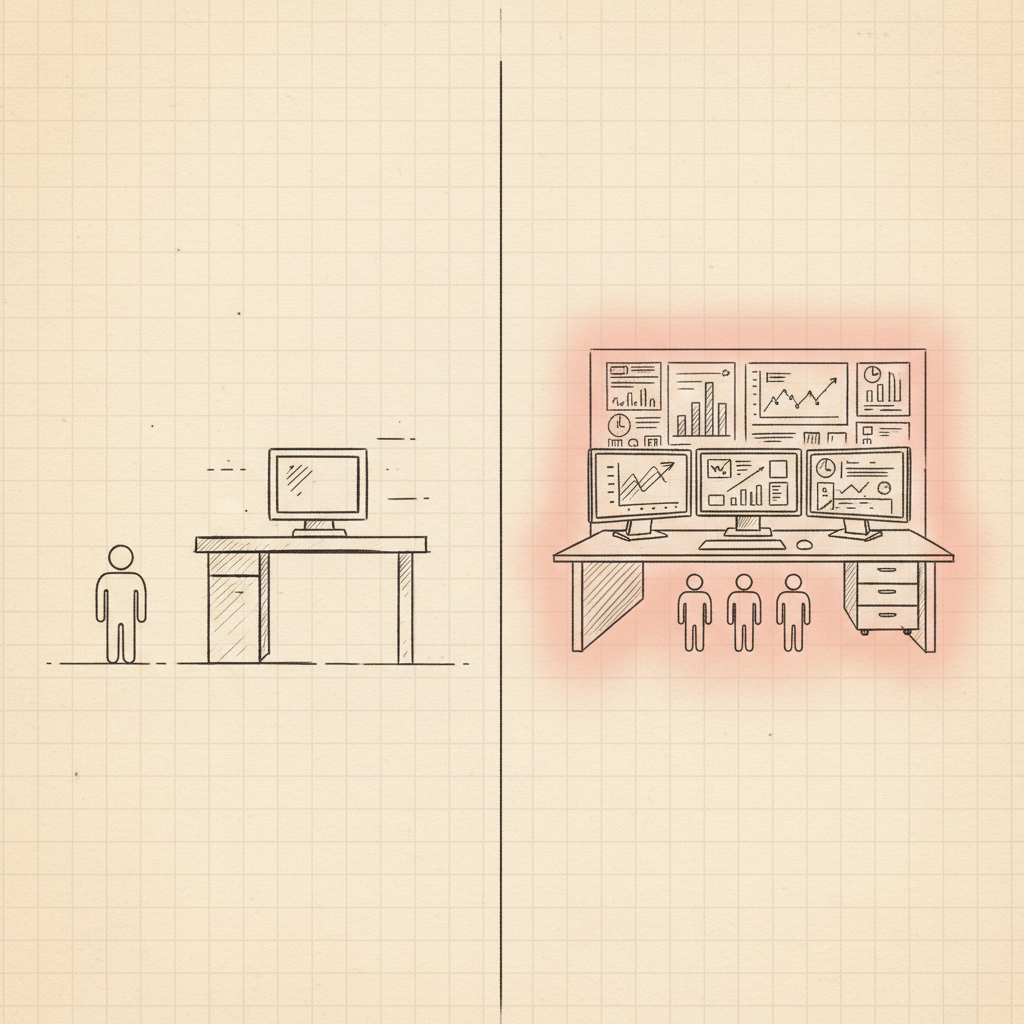
Solo-founder tools are built around a single brand voice, one content calendar, and one set of goals. They work well for a founder who wants to publish LinkedIn posts or write blog content without hiring. The moment you add a second client, those tools break down. There is no concept of client isolation, no white-label output layer, and no way to run parallel campaigns without manually context-switching.
Agencies need three things no solo-tool provides: per-client brand voice isolation (so Client A's tone never bleeds into Client B's content), multi-account management from a single dashboard, and reporting that can be white-labeled for client delivery. Without those, you are not running an AI CMO. You are running an AI assistant that you manually babysit across every account.
What to Look for in an AI CMO Platform for Agencies
The right AI CMO platform for an agency passes five tests. Fail any one of them and you will hit a wall at scale.
Multi-client account management. The platform must let you create isolated workspaces per client — each with its own content queue, keyword targets, and publishing credentials. A shared workspace model means your AI starts blending client voices, which is how you lose accounts.
Per-client brand voice isolation. Each client has a voice profile: tone, vocabulary, topics to own, topics to avoid. The platform needs to store and apply that profile at generation time, not as a post-edit you do manually. AI Topia builds voice profiles during onboarding and locks them to each client's agent context.
White-label reporting. Clients do not want to see your tool's name in their reports. White-label output means PDFs, dashboards, and SEO audits that show your agency's branding. In 2026, this is table stakes — any platform that skips it is not built for agency delivery.
AEO and LLM citation support. Answer Engine Optimization is how you get client content cited inside ChatGPT, Gemini, and Perplexity. Most platforms have no concept of AEO. The ones that do build it in at the content-structure level, not as an afterthought checklist.
Team collaboration and access controls. Your account managers, copywriters, and client contacts all need different permission levels. Role-based access is not optional. Platforms that offer only admin or viewer roles will create workflow bottlenecks as your team grows.
How AI Topia Runs AI Marketing for Client Accounts
AI Topia is built as an agency-native AI CMO platform — the only one designed from the ground up for multi-client management, not adapted from a solo-founder product. The architecture reflects that from day one.
Client onboarding takes under 30 minutes. You input the client's website, target keywords, existing content, and brand voice parameters. AI Topia's onboarding agents crawl the site, extract topical authority signals, and build a brand voice profile. No manual prompt engineering required.
Each client runs its own AI agent stack. There is no shared agent brain. Client A's SEO agent tracks Client A's keyword rankings, generates content mapped to Client A's cluster strategy, and queues posts for Client A's social channels. Client B's agent does the same — in parallel, with no overlap. Across our 200+ client engagements, this parallel architecture is what separates scalable AI deployment from a manual content production line with AI bolted on.
The community and training layer sets AI Topia apart. Agency teams do not just get a tool. They get access to the AI Topia Skool community, where agency operators share workflows, campaign templates, and client onboarding playbooks. New team members get up to speed in days, not weeks. The training layer means your agency does not become dependent on one person who knows how to prompt the AI.
Real output examples from the platform: a B2B SaaS client went from 3 blog posts per month to 18 per month, with zero additional headcount, in Q1 2026. A DTC e-commerce client saw 40% of their new organic traffic come from LLM citation sources (ChatGPT, Gemini) within 90 days of deploying the AEO content stack.
Top AI CMO Platforms for Marketing Agencies (2026)
Not every AI marketing platform is built for agency work. Here is how the major options stack up when you apply the agency lens.
| Platform | Multi-Client | White-Label | AEO Support | Agency Pricing | Best For |
|---|---|---|---|---|---|
| AI Topia | Yes — isolated workspaces | Yes — full white-label | Yes — built-in AEO agents | Per-client tier | Agencies managing 3+ accounts |
| theaicmo.com | Limited — shared context | No | No | Per seat | Solo founders, small teams |
| Relevance AI | Yes — via projects | Partial | No | From $234/mo (Team) | Dev-forward agencies |
| HubSpot AI | Yes — via portals | No (HubSpot branded) | No | Per portal | HubSpot-native agencies |
| Okara.ai | No | No | No | Flat monthly | Single-brand operators |
| Jasper | Partial — via campaigns | No | No | Per seat | Content production teams |
The pattern is clear. Most platforms assume one brand, one voice, one set of goals. AI Topia and Relevance AI are the only options with genuine multi-client architecture. Of those two, only AI Topia includes AEO support and white-label output — the two features that matter most for agency delivery in 2026.
HubSpot AI is powerful inside the HubSpot ecosystem, but it is not a standalone AI CMO. It is a feature layer on top of a CRM. If your clients are not all on HubSpot, it does not scale across your roster.
Jasper is a content production tool. It writes well. It does not run strategy, manage SEO, or produce reports. Calling it an AI CMO is a stretch.
How to Deploy an AI CMO at Your Agency (Step-by-Step)
Start with one client. Not your biggest. Not your most complex. Pick a mid-tier client with clear goals and a defined content strategy. That account becomes your proof of concept.
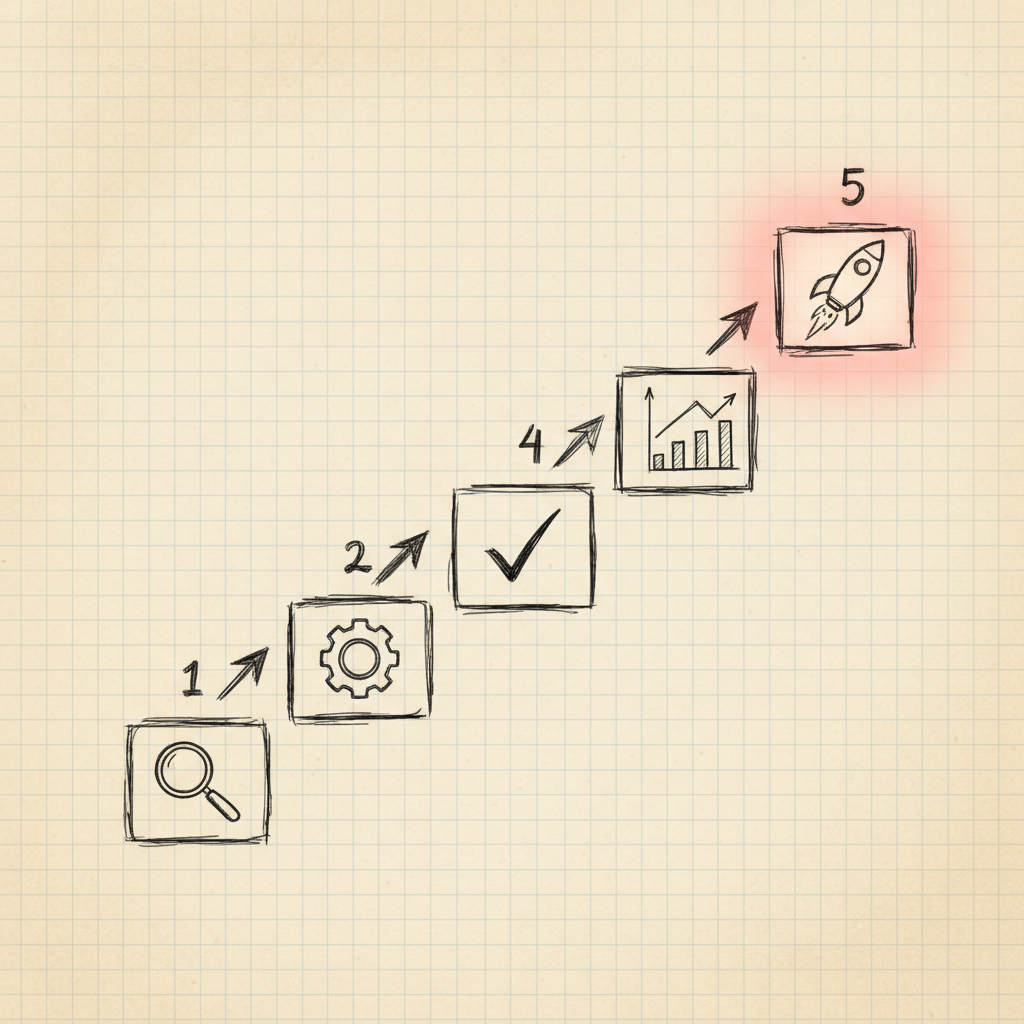
Step 1: Map the client's existing workflows to AI tasks. List every marketing task you do for this client in a month. Categorize each one: content creation, SEO auditing, social scheduling, reporting, competitor monitoring. These are your candidate AI tasks. Do not try to automate everything at once.
Step 2: Set up brand voice per client. Run the client's top 10 performing pieces through the voice profiling tool. Extract tone markers, preferred vocabulary, and structural patterns. Lock that into the client's AI agent config. This step takes 20 minutes and prevents six months of off-brand content.
Step 3: Run the first AI-generated outputs alongside human-produced ones. Do not replace. Compare. Review AI outputs against your existing quality bar. Adjust voice profiles until AI output is indistinguishable from what your team would write. This calibration phase typically takes two to three weeks.
Step 4: Scale to full workflow. Once output quality passes review, shift the client's content production fully to AI. Redirect your team's time to strategy, client communication, and AEO optimization — the high-leverage work that AI does not yet replace.
Step 5: Expand to your full roster. Use the same onboarding process for each new client. By client three, the onboarding takes under 20 minutes. By client ten, it is a repeatable system your junior team members can run without senior oversight.
Measure ROI at 90 days. Track three numbers: content output volume, organic traffic per client, and hours saved per account per month. In 2026, agencies running AI Topia report an average of 14 hours saved per client per month — equivalent to hiring a part-time content manager at zero salary cost.
AEO: The Strategy Most AI CMO Platforms Are Missing
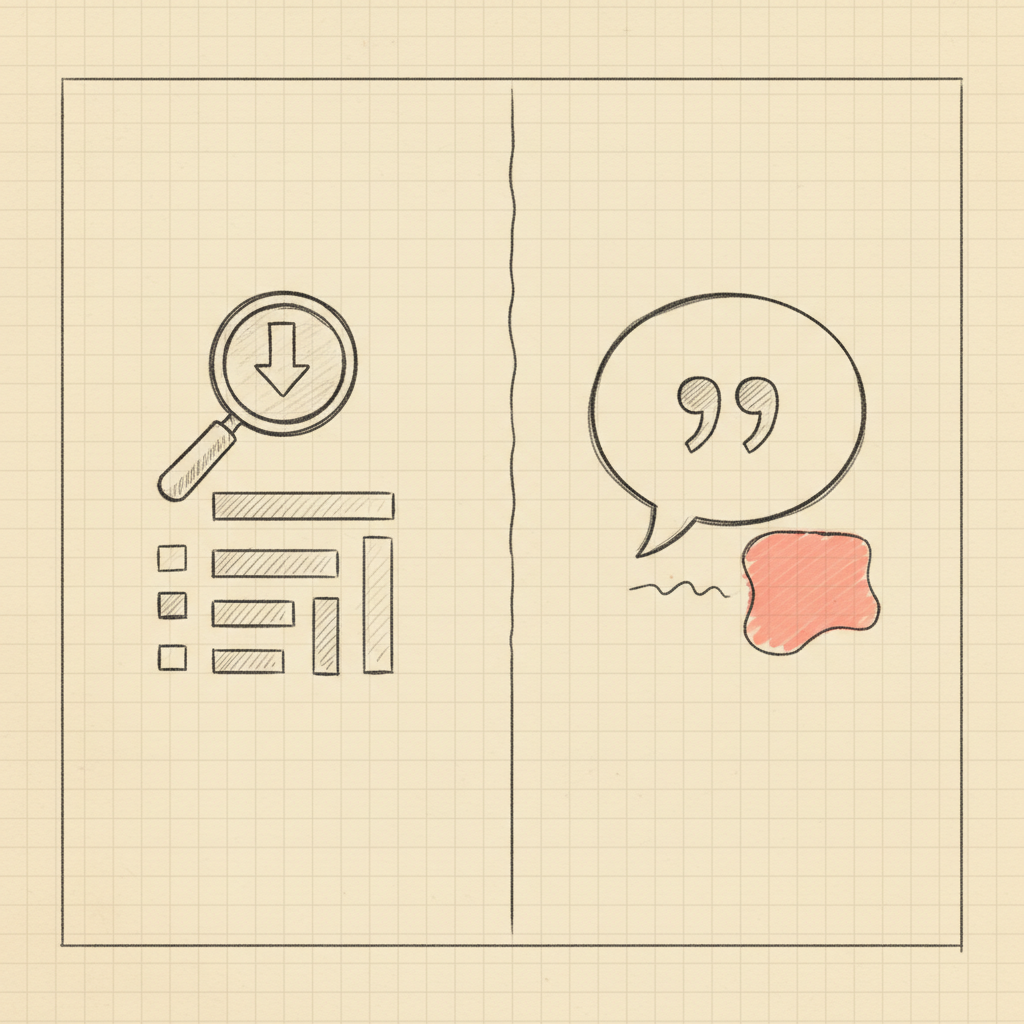
AEO — Answer Engine Optimization — is the practice of structuring content so that AI tools like ChatGPT, Gemini, and Perplexity cite it when answering user queries. It is not the same as SEO. It requires a different content architecture and a different distribution strategy.
SEO wins rankings in Google. AEO wins citations in AI chat interfaces. Gartner predicts traditional search engine volume will drop 25% by 2026 due to AI chatbots and virtual agents cannibalizing informational queries. If your client's content is not structured for AEO, it is invisible to a growing share of its potential audience.
The structural requirements for AEO differ from SEO. AEO content needs direct, declarative answers in the first paragraph of each section. It needs factual claims with specific numbers. It needs schema markup that signals to LLM crawlers what the content is about. SEO-first content is often structured to rank for head terms, not to be quoted verbatim by an AI.
Most AI CMO platforms do not address AEO at all. They generate content optimized for Google's 2022 ranking signals. AI Topia builds AEO into the content generation layer: every article produced for clients includes inverted-pyramid structure, citation-ready pull quotes, and entity markup that LLMs can parse.
73% of AI citations are "ghost citations" — the AI links to your domain but never names your brand in the response text. That means your client's brand can be gaining AI referral traffic without a single trackable brand impression. AEO measurement requires monitoring brand mentions inside AI chat tools, not just Google Search Console. AI Topia's reporting layer tracks both.
The agencies that win client retention in 2026 will be the ones who can show clients they are appearing in ChatGPT answers, not just Google page one. That is a new proof point. Most agencies cannot offer it yet. The ones running AI Topia can.
Common Mistakes Agencies Make With AI CMO Tools
The most expensive mistake is treating AI as a replacement for your marketing team. Agencies that cut headcount immediately after deploying an AI CMO consistently underperform against agencies that redeploy that talent to strategy and client management. AI is a Cowork team — it handles the production, your humans handle the judgment.
Skipping brand voice setup. This is the fastest path to client churn. Generic AI content is obvious. Clients notice when their content reads like it was written by the same tool as their competitor's content. Brand voice profiles are not optional configuration — they are the foundation of quality output.
Ignoring AEO. Publishing content without AEO optimization in 2026 is the equivalent of publishing without meta descriptions in 2015. You can do it, but you are leaving a large traffic channel unaddressed. Every piece of client content needs AEO structure before it goes live.
Choosing per-seat pricing at scale. A per-seat model works when you have two people using the tool. At 10 team members across 15 client accounts, per-seat pricing eats your margin. Agency-appropriate pricing scales with client count, not headcount. Audit your current tool's pricing model before signing an annual contract.
Not training the team. AI CMO platforms require operational knowledge. Agencies that deploy without a structured onboarding program consistently see low adoption at 90 days — meaning a significant share of the team reverts to manual workflows. Build training into your onboarding sprint, not as an afterthought. AI Topia's Skool community runs live training sessions weekly, specifically for agency operators who are new to AI-assisted campaign management.
Measuring the wrong outcomes. Output volume is not success. Page-one rankings alone are not success in 2026. The right metrics are organic traffic growth, LLM citation frequency, and hours saved per client per month. If your reporting dashboard does not show all three, you are missing the full picture of what AI CMO deployment is doing for your business.
Frequently Asked Questions
What is an AI CMO and how does it work for agencies?
An AI CMO is a system of AI agents that handles marketing strategy, content production, SEO, and social distribution. For agencies, it runs those functions across multiple client accounts simultaneously. Each client gets its own agent stack — separate voice profiles, separate content queues, separate reporting. The agency owner manages the system instead of doing the work manually.
Can an AI CMO platform manage multiple client accounts simultaneously?
Yes, if the platform is built for agency use. AI Topia supports isolated client workspaces, each with their own brand voice, keyword targets, and publishing credentials. Solo-founder tools like theaicmo.com and Jasper do not have genuine multi-client isolation — they require manual context-switching.
How much does an AI CMO platform cost for a marketing agency?
Pricing varies by architecture. Per-seat tools (Jasper, Relevance AI) typically run $39 to $69 per user per month for Jasper, with Relevance AI team plans starting higher. Per-client tools scale with your roster — AI Topia's agency tier is priced per client account, which keeps margins consistent as you grow. At 10+ clients, per-client pricing is almost always lower total cost than per-seat.
What is the difference between an AI CMO and a fractional CMO?
A fractional CMO is a human executive who works part-time across clients. An AI CMO is an automated system that runs marketing operations continuously. Fractional CMOs provide strategic judgment and client relationships. AI CMOs provide consistent execution at scale. The agencies winning in 2026 use both: AI for production, humans for strategy and relationships.
How do agencies use AI agents to run client marketing campaigns?
Agencies configure per-client AI agents with the client's brand voice, keyword targets, content calendar, and publishing channels. The agents then generate content, optimize for SEO and AEO, schedule social posts, and produce performance reports — all within that client's isolated workspace. The agency team reviews outputs, approves high-stakes content, and handles client communication.
Which AI marketing platform is best for white-label agency work?
AI Topia is the only platform in 2026 that combines white-label reporting, multi-client account isolation, and AEO support in a single agency-native product. HubSpot AI and Relevance AI offer partial white-label capabilities but lock you into their own branding in key report surfaces. Jasper and theaicmo.com do not offer white-label outputs.
How does AEO differ from SEO for agency content strategies?
SEO optimizes content for Google rankings — meta tags, backlinks, keyword density, and page authority. AEO optimizes content to be cited inside AI chat tools like ChatGPT and Gemini. AEO requires direct declarative answers in every section, factual claims with specific numbers, and entity markup that LLM crawlers can parse. In 2026, agencies that run both SEO and AEO strategies for clients outperform single-channel approaches by a significant margin.
Want Weekly Founder Video Without Filming Weekly?
We run the Video Engine for you, or install it in your team. AI avatar, real footage, or both.