
AI SDR: Every Buyer Hands You a Signal. The Money Leaks in the Gap (2026)

Every buyer hands you a signal. The money is lost in the gap between their signal and your response.
A client of ours was losing sales every night after her store closed. Customers showed up at 1am with product questions. Nobody was there to answer. By morning, they had already bought from someone else.
So we built her an after-hours agent. It answers every product question in seconds, recommends the right item, and drops the exact link to buy, while the team sleeps. The orders that used to vanish overnight now close on their own.
Here is what every founder misses. Every customer hands you a buying signal, and the money is lost in the gap between that signal and your response. The slower you answer, the more you lose. An AI SDR is how B2B teams close that gap. This is what one is, why most of them fail, and how a real one turns signals into booked revenue.
Key Takeaways
- An AI SDR is software that handles early-stage sales work, prospecting, outreach, qualification, and booking, with minimal human input.
- Most AI SDRs fail because they play the volume game. Only about 2% of full AI SDR replacements stick long-term.
- The real problem is the gap between a buyer signal and your response. That gap is where revenue leaks.
- A real AI SDR closes the gap two ways: speed (respond in seconds) and signal (chase in-market buyers, not cold lists).
- Responding to a lead within five minutes sharply increases the odds of qualifying it versus waiting an hour.
- Put the AI SDR on B leads and instant first-touch; keep humans on A leads. Pairing the two produces 2.8x the pipeline of AI alone.
- AI Topia deploys the AI SDR as a Lead Acquisition agent inside a managed Signal-to-Revenue system.
What Is an AI SDR?
An AI SDR (AI Sales Development Representative) is software that performs early-stage sales work autonomously: prospecting, outreach, qualification, and meeting booking, with minimal human input. It does not wait for a rep at each step. It decides the next-best action and takes it.
A human SDR does the same job. The difference is bandwidth. Salesforce's State of Sales report finds that SDRs spend over two-thirds of their time on non-selling tasks: logging activity, researching contacts, scheduling follow-ups. That leaves little room to respond fast when a buyer actually signals intent. An AI SDR runs those tasks in the background, continuously, while the human handles the conversations that need judgment.
Do not confuse an AI SDR with a volume-blast tool. A volume-blast tool sends thousands of cold emails automatically and calls it sales. An AI SDR qualifies leads, identifies the right buyers, personalizes outreach based on real signals, and routes only the right contacts to a human. The distinction matters because the volume approach burns your domain, wastes budget, and rarely fills a pipeline with deals that close.
A close cousin is the AI BDR (AI Business Development Representative). The terms overlap heavily. Both automate early-stage outreach. The BDR label typically leans outbound: cold prospecting, intent-based targeting, and new-business sequences. If you are building a pure outbound motion, you may see the AI BDR framing more often. For practical purposes, treat them as the same category of tool applied to a similar job. For a deeper look at building that outbound motion, see AI SDR agents for outbound.
The definition alone is not what matters. What matters is whether the tool actually closes the gap between a buyer's signal and your response. Most do not. That is the problem this article addresses next.
Why Most AI SDRs Fail: The Volume Trap
Most AI SDRs fail for one reason: they treat volume as the goal. They send 500 to 5,000 emails a day compared to a human SDR's 50 to 100. That is a 10 to 50x output advantage on paper. On pipeline, it produces almost nothing.
The numbers are damning. Only 2% of full AI SDR replacements stick long-term, and 50 to 70% churn within a year, according to research cited by Salesmotion via Topo.io. The reason is always the same: the volume-blast model never produced qualified pipeline. It produced noise.

Volume-blast tools work by spraying cold scraped lists as fast as possible. That approach does two things, both bad. It burns your sending domain through spam signals. And it burns your brand by reaching people who never raised their hand.
An AI SDR that brags about 5,000 emails a day is a warning sign. That metric tells you it is optimizing for activity, not signal. In 2026, inbox placement rates have dropped sharply for high-volume cold senders. The volume game is getting harder and more expensive every quarter.
The volume trap exists because it is easy to measure. Emails sent is a visible number. Qualified pipeline from in-market buyers is harder to track, so teams default to the metric they can see. That is how you end up with an AI SDR working overtime and a sales team with nothing to close.
Volume was never the job. The job is getting the right message to the right buyer at the moment they are ready. Across 30+ client deployments at AI Topia, the pattern is consistent: teams that switched from volume to signal targeting saw reply rates climb while total send volume dropped. Less noise, more revenue.
The fix is not to send fewer emails. The fix is to stop chasing cold lists and start chasing signals. That shift is what separates a real AI SDR from a glorified spam cannon, and it starts with understanding where revenue actually leaks.
The Real Problem Is the Signal-to-Response Gap
The real revenue leak in B2B sales is not a lack of leads. It is the gap between a buyer signal and your response. Every buyer hands you a signal: a form fill, a site visit, a 1am product question, a job change, a funding round. The money is lost in that gap. The slower you answer, the more you lose.

Most teams never see the leak. The buyer does not complain. They do not email you to say they moved on. They just quietly buy from whoever answered first. Your CRM shows zero activity on that lead because zero activity is exactly what happened on your end.
This is what we call Signal-to-Revenue: the system that closes the distance between a buyer signal and a booked meeting. The gap is the enemy. Every tool, every process, every agent in the system exists to shrink that gap toward zero.
The gap has two dimensions. The first is time: how many minutes or hours pass before you respond. The second is coverage: how many signals you actually see versus how many slip by unnoticed. Most teams are losing on both.
The proof is measurable. NextGen Healthcare audited their inbound and found 1,400 missed chat conversations per month. Leads arrived after hours, nobody responded, the window closed. When they deployed an AI SDR to cover those gaps around the clock, they recovered those conversations and added $60,000 in monthly revenue that had been walking out the door (Qualified, 2026).
That number is not extraordinary. It is ordinary. Most companies have a version of this gap. They do not have a lead problem. They have a response-timing and coverage problem dressed up as a lead problem.
An AI SDR fixes both dimensions of the gap. It sees every signal. It responds in seconds, not hours. In 2026, the competitive edge is not who has the best script. It is who responds first to the right signal. The next section shows exactly how a real AI SDR closes the gap on speed and signal at the same time.
How a Real AI SDR Closes the Gap: Speed and Signal
A real AI SDR closes the signal-to-response gap on two fronts: speed and signal. Speed kills the time delay between a buyer's action and your reply. Signal kills the wasted effort of chasing people who were never going to buy. Solve both and the results compound fast.
Does Response Speed Actually Matter?
It does, and the data is not subtle. Harvard Business Review found that firms contacting a lead within an hour are far more likely to qualify it than those who wait longer. The five-minute window is where the odds are highest. Wait 30 minutes and the same lead is cold.
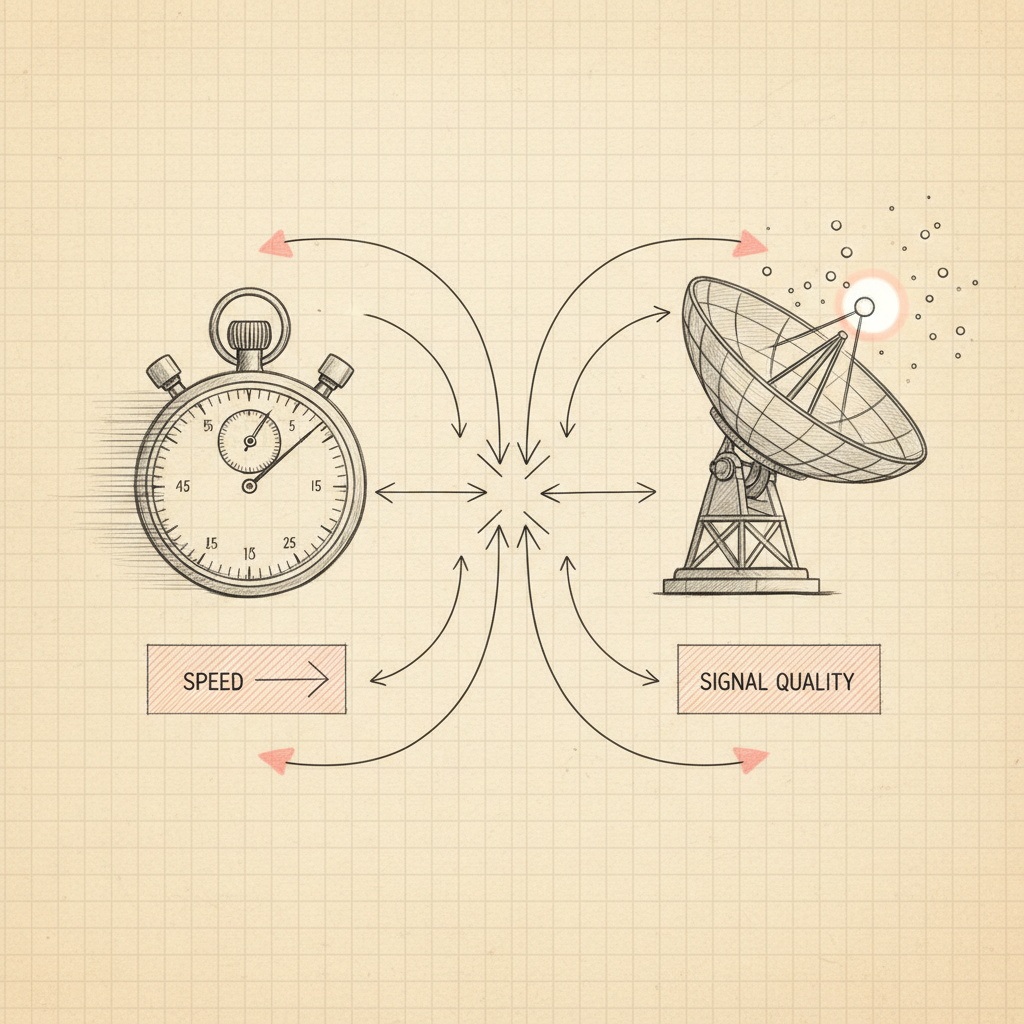
An AI SDR responds in seconds, around the clock. It does not wait for a rep to log on at 9am. It does not take a lunch break. Every form fill, every site visit, every 2am inquiry gets a reply before a competitor can react. That speed also gives time back to your team: the right AI SDR saves a rep over two hours a day on lead-gen tasks, freeing them for the conversations that actually require judgment.
Should You Chase Intent Signals Instead of Cold Lists?
Yes, always. Signal closes the targeting half of the gap. A scraped cold list is a list of people who have not told you anything. An intent signal is a buyer raising their hand in real time.
A real AI SDR monitors the signals that matter: site visits, third-party intent data, job changes, funding rounds, tech-stack changes, and content engagement. When a target account checks your pricing page three times in a week, that is a signal. When a VP of Sales at a target company switches jobs, that is a signal. The AI SDR catches it and reaches out while the window is open, not after a human batch-reviews a spreadsheet on Friday afternoon. For teams already running paid acquisition, this signal layer pairs directly with the Paid Ads agent to close the loop between ad click and sales response.
When speed and signal work together, they compound. Demandbase doubled pipeline generation in one month and saved $80,000 in headcount by deploying a signal-driven AI SDR. That is not a speed win or a targeting win in isolation. It is both running at the same time.
The next question is how this stacks up against a human SDR, and where each one wins.
AI SDR vs Human SDR
In head-to-head tests, human SDRs generated roughly 2.6x more revenue than AI SDRs and achieved higher meeting show rates (71% vs 52%), because judgment and relationships still win complex deals. That is the honest answer. AI does not beat humans at selling. It beats humans at the work before the sale: the instant response, the signal monitoring, the tireless follow-up at 2am.
| AI SDR (real) | Volume-blast tool | Human SDR | |
|---|---|---|---|
| Speed to respond | Seconds, 24/7 | Slow batch sends | Minutes to hours, business days |
| Works on signal | In-market buyers only | Cold scraped lists | Yes, but limited bandwidth |
| Scales | Thousands of signals at once | Volume, low quality | One conversation at a time |
| Best at | Instant first-touch, B leads | Nothing durable | A leads, complex deals, relationships |
| Guardrail | Humans approve A-lead outreach | None | Human is the bottleneck |
| Cost per year | $12k-$60k per license | Cheap, burns domain | $100k-$150k loaded |
The math changes when you stop comparing and start pairing. Teams that pair AI SDRs with human oversight report 2.8x more pipeline than teams using AI alone. That is not a rounding error. It is what happens when you stop making the two compete and start giving each one the work it is actually built for.
Does an AI SDR Replace a Human SDR?
No. An AI SDR replaces the parts of the job no human should be doing in 2026. The SDR role has a 14-month average tenure and 52% annual churn. That turnover is not a people problem. It is a workload problem: humans burning out on volume tasks and missed signals they were never fast enough to catch. The AI SDR absorbs that load. The human gets the conversations worth having.
The deploy pattern is straightforward. Put the AI SDR on B leads and instant first-touch. Keep humans on A leads, complex deals, and relationships. The AI never tires, never misses a signal because it was sleeping, and never lets a qualified lead sit for six hours because a rep was on another call. The human brings the judgment the AI cannot fake: reading the room, navigating a stalled deal, knowing when to push and when to wait.
Augment, not replace. The teams winning in 2026 are not the ones who chose AI over humans or humans over AI. They are the ones who wired the two together and let each do the work it is best at.
What an AI SDR Costs and How to Deploy It Safely
A human SDR runs $100,000 to $150,000 a year fully loaded. AI SDR platforms run $12,000 to $60,000 per license, which is 20 to 60% of that cost. Scale to a five-person team and the math becomes sharp: human-only teams can cost $555,000 to $840,000 a year, all in. The savings are real, but only if you deploy the tool correctly. That is where most teams stumble. For the broader GTM engineering picture, budget and deployment are always paired decisions.
How Do You Deploy an AI SDR Without Burning Relationships?
Split the work by stakes. The AI handles two things: instant response on every inbound signal and B-lead volume outreach. Humans approve one thing: any A-lead outreach and anything high-stakes. That line keeps relationships safe and response times fast at the same time.
Wire the system to your CRM before you launch anything. Every signal the AI catches, every reply it gets, every meeting it books, must become a tracked action in your pipeline. If it is not in the CRM, it did not happen. Untracked conversations are lost revenue, just like the missed signal that started this problem.
Set human-approval gates on your highest-intent leads. A-leads are your best-fit accounts showing strong buying signals. Those deserve a human touch on the outreach, even if the AI spotted them first. The AI surfaces the signal; the human crafts the approach. That division gives you speed and judgment together, which is where the 2.8x pipeline lift actually comes from.
How AI Topia Deploys It
AI Topia builds and runs the Lead Acquisition agent as part of a fully managed Signal-to-Revenue system. We own and operate the infrastructure. You own your accounts, your data, and your results. There is no SaaS seat to configure and no vendor to troubleshoot at 2am. The Lead Acquisition agent we deploy is wired directly into your CRM, runs your signal-monitoring, and hands off to your team with a clean audit trail on every action it takes.
This is not a tool you install. It is a system we run for you. The difference matters because most AI SDR failures are deployment failures, not product failures. The cost is a fraction of a hire. The results are tracked from day one.
Frequently Asked Questions
What is an AI SDR?
An AI SDR is software that performs early-stage sales development autonomously: prospecting, outreach, qualification, and meeting booking, with minimal human input. Unlike a human SDR who does each step by hand, it decides the next-best action and takes it on its own. The strongest ones respond to buyer signals in seconds and route only qualified contacts to a human rep.
How much does an AI SDR cost?
AI SDR platforms typically run $12,000 to $60,000 per license a year, which is 20 to 60% of a human SDR's $100,000 to $150,000 fully loaded cost. A five-person human team can run $555,000 to $840,000 all in. The number that actually matters is cost per booked meeting, not the seat price, so judge any tool on pipeline produced, not licenses bought.
Will SDRs be replaced by AI?
Not fully. In head-to-head tests, human SDRs still generate more revenue on complex deals and get higher meeting show rates. AI takes the volume work and the instant response; humans keep A leads, judgment, and relationships. Pairing the two produces more pipeline than either alone, so the realistic outcome is a smaller, sharper human team backed by an AI SDR, not an empty sales floor.
What is the difference between an AI SDR and a traditional SDR?
A traditional SDR does prospecting, outreach, and follow-up manually, one step at a time, during business hours. An AI SDR does the same work autonomously and instantly, around the clock. The biggest practical difference is speed of response: a human replies in minutes or hours, an AI SDR replies in seconds, which is where most of the qualification advantage comes from.
Does an AI SDR work for inbound or outbound?
Both. On inbound, it responds to form fills and site visits in seconds, closing the speed-to-lead gap. On outbound, it finds in-market buyers through intent signals and reaches out while the window is open. The strongest setups run both motions at once, wired to your CRM so every signal becomes a tracked action instead of a lost chat.
What is an AI BDR?
An AI BDR is the outbound-focused cousin of an AI SDR. It automates business development work: cold prospecting, intent-based targeting, and new-business outreach sequences. SDR and BDR overlap heavily, and many tools cover both jobs. If your motion is purely outbound, you will see the BDR label more often, but the underlying technology is the same.
How fast should you respond to a lead?
As fast as you can. Harvard Business Review research shows that contacting a lead within an hour, ideally within five minutes, sharply raises the odds of qualifying it compared to waiting longer. After 30 minutes, the same lead goes cold. An AI SDR delivers that five-minute response around the clock, which is exactly why speed-to-lead is its single biggest advantage.
The Bottom Line
You do not have a lead problem. You have a gap problem. Every buyer hands you a signal, and revenue leaks in the space between that signal and your response. Volume-blast AI SDRs make the gap worse by spraying cold lists slowly. A real AI SDR closes it on both fronts: it responds in seconds, and it only chases buyers who are actually in market. Pair it with a human team on your A leads and the pipeline compounds.
That is the whole game in 2026. Not who sends the most emails. Who answers the right signal first. AI Topia deploys the AI SDR as a Lead Acquisition agent inside a fully managed Signal-to-Revenue system, wired to your CRM and tracked from day one.
Ready to close the gap between your buyer signals and your response? Book a Build Call.
Ready to Automate Your Business?
Book a 30-minute call to discuss how AI can transform your Marketing, Sales, or Operations.
Book a Call