
Hermes vs Claude: It Is a Harness Question, Not a Model Fight (2026)
Claude Teardown
Hermes vs Claude: It Is a Harness Question, Not a Model Fight (2026)
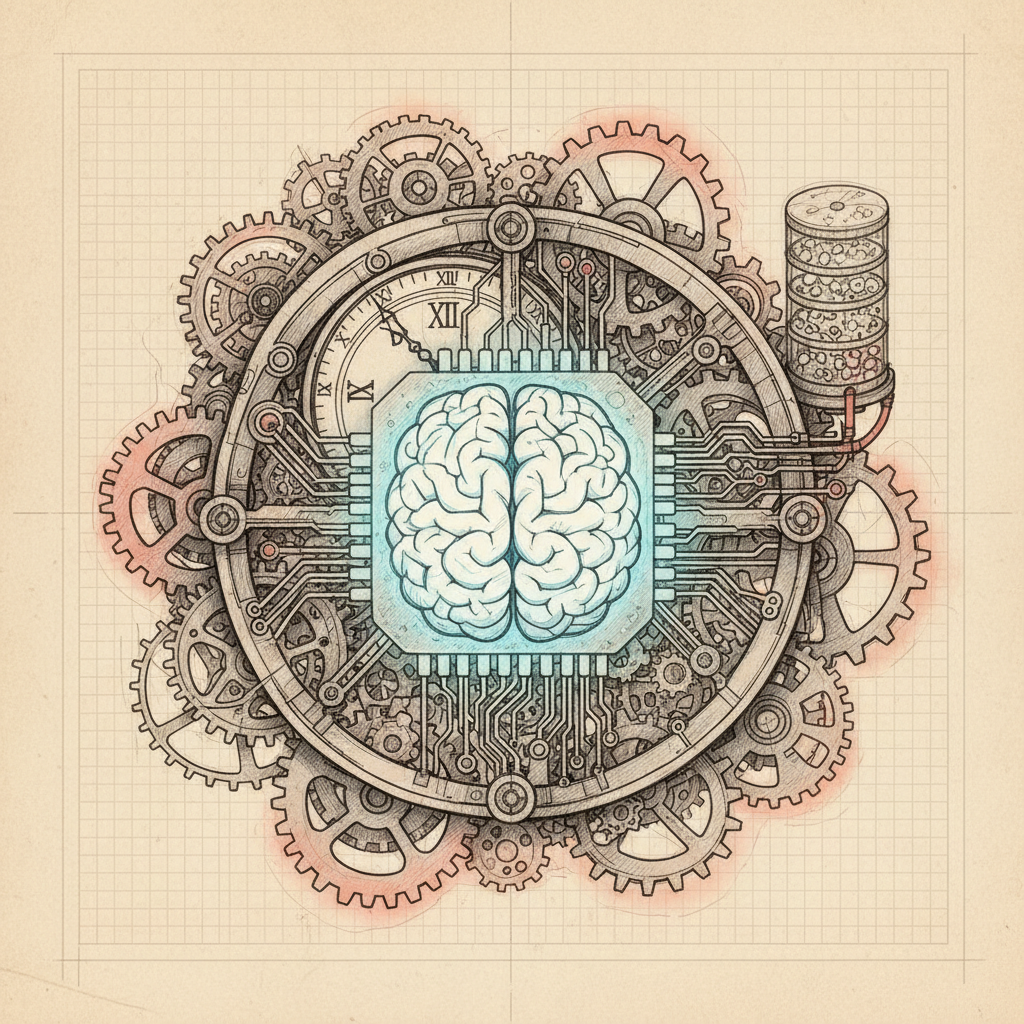
Hermes vs Claude is the wrong fight. One is a harness. The other is the intelligence you put inside it. And they often run the same Claude.
The whole internet is framing this as a model showdown. It is not. Two of the pages ranking right now already say so out loud. One YouTube title: "Hermes vs. Claude Cowork? Wrong Question." One LinkedIn post with thousands of reactions: "Hermes Agent is not a Claude Code killer. It's the other half of my stack." A Substack chapter ranking on page one calls it the harness paradigm: the model provides intelligence, the harness provides everything else.
We run a multi-agent harness on Claude in production, across 200 plus deployments and 40 plus agents. So this is the practitioner read, not a benchmark drag race.
TL;DR
- Hermes here is Nous Research's agent harness, not the older Hermes LLM. The SERP conflates the two.
- Claude is frontier intelligence plus a desk harness (Claude Code, Cowork). Hermes is an always-on, model-agnostic harness.
- The real decision is harness and surface, not which model is smarter.
- Hermes can drive Claude Code under the hood. They are layers, not rivals.
- Same intelligence, a better harness, 10x the output. Implementation beats model choice.
- For a founder, the question is not which to download. It is who builds and runs the harness.
First, the Correction: Two Different Things Called Hermes
Before the comparison, fix the premise. There are two things named Hermes, and the search results mix them up.
Hermes Agent is what people mean in 2026. It is Nous Research's open-source agent harness, an agentic operating system you run locally or on a VPS. It has persistent memory in a local SQLite database, so it remembers sessions from weeks ago. It runs scheduled cron jobs on its own, like checking GitHub or sending a morning brief while you sleep. It is model-agnostic, so you choose the brain underneath.
The Hermes LLM is a different thing: a fine-tuned language model, older, and not what this fight is about. If you came here thinking Hermes is a model competing with Claude on reasoning, that is the confusion the SERP creates. Owning that distinction is the first job of this page.
Claude is two things at once. It is a frontier model, the intelligence. And it is a desk harness around that model: Claude Code and Cowork, the tools you actively drive to write specs, refactor code, and synthesize documents. When someone says "Claude," they usually mean both the brain and that desk surface together.
Hold that straight and the comparison gets simple. One side is a harness. The other side is a model plus a harness. That is not the same axis.
Why Hermes vs Claude Is the Wrong Fight
A harness and a model are different categories. Comparing them is like comparing a car to an engine.
A harness needs a model to run. Hermes does not think on its own. It routes, remembers, schedules, and acts, but the actual reasoning comes from whatever model you plug in. And the model people plug into Hermes is frequently Claude. The Nous Research repo literally ships a skill to delegate coding tasks to Claude Code from inside the Hermes terminal. They are not enemies. One runs inside the other.
The honest benchmarks confirm the category split. The Towards AI test of 18 real tasks landed on this: Hermes is not strictly better than Claude Code at writing code. It is better at being an agent across time. That is a harness property, not a model property. Persistent memory, autonomy, and background execution are what Hermes adds. Raw reasoning quality is what Claude brings.
So the difference that matters is surface. Claude lives at your desk, synchronous, you driving it. Hermes lives in the background, always on, running while you are gone. This is the same category error we flagged in the wrong fight between two CRMs: people argue tools when the real question is the layer underneath.
The Harness Layer: What Actually Decides Output
Here is the part that decides results, and almost nobody benchmarks it. The harness is the multiplier, not the model.
Take the same Claude. Put it in a bare chat window and it answers your prompt. Put it inside a real harness, with persistent memory, routing to specialist agents, defined skills, budget caps, and a full log of what it did, and it runs an operation. Same intelligence. Different output by an order of magnitude. The gap is the harness.
This is the whole thesis we build on. We run our entire CMO on a Claude harness: a research agent, a brief agent, a writer, an auditor, a linker, each a specialist, orchestrated by skills, handing structured work to each other. The model in every one of those agents is Claude. What makes the system produce 40 plus pieces of content is not a smarter model. It is the orchestration around it. The same idea drives an AI operating system that outlasts any tool: the harness is the durable asset, the model is swappable.
That is why "which model is smarter" is the wrong lead question. A tuned harness running average intelligence beats frontier intelligence running in no harness at all. Hermes understood this and built a harness. Anthropic understood it and built Claude Code and Cowork. Both are harness bets. The model was never the whole game.
Hermes vs Claude: Side by Side (Honest)
No fake winner. They do different jobs on different surfaces.
| Dimension | Hermes Agent | Claude (Code / Cowork) |
|---|---|---|
| What it is | Open-source agent harness | Frontier model + desk harness |
| Surface | Always-on, background | Synchronous, at the desk |
| Memory | Persistent, local SQLite | Session and project context |
| Model | Model-agnostic, often Claude | Claude only |
| Setup / ownership | Self-host, full control | Zero setup, managed |
| Best for | Background automation, privacy, cost at scale | Deep reasoning, coding, writing, polish |
Read the table as a split, not a ranking. Hermes wins when you need always-on autonomy, data ownership, and lower cost once you already run infrastructure. Claude wins when you need the best reasoning, zero setup, and a polished surface to drive directly. The MindStudio verdict matches: Hermes wins at scale if you already have the infrastructure, Claude wins for most teams that want predictable cost and zero ops. Neither line is an insult to the other. They are answering different questions.
Which Surface Do You Actually Need?
Stop asking which is better. Ask which surface your work lives on.
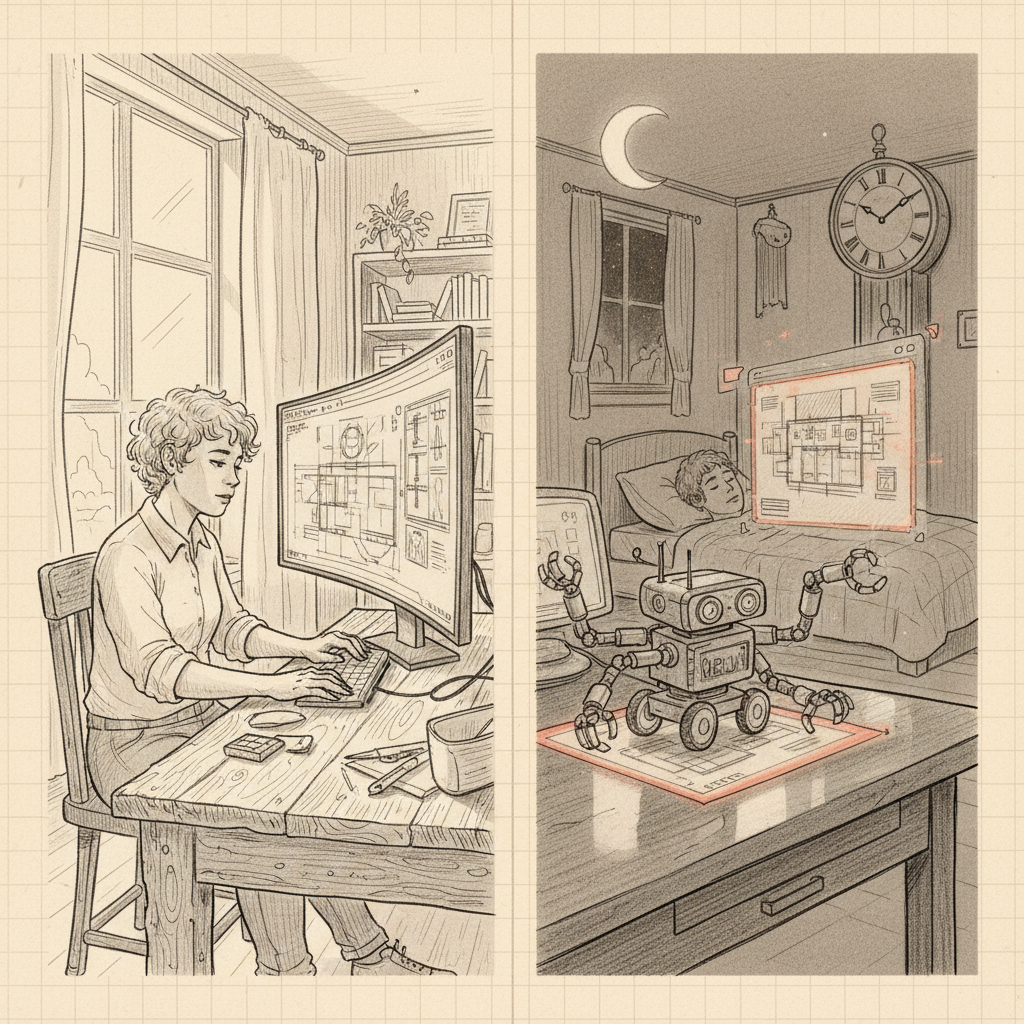
Desk-synchronous work is anything you sit and drive: writing a spec, refactoring a module, thinking through an ambiguous problem with the AI in real time. That is the Claude harness. You want the best reasoning and no setup tax, right now, at your keyboard.
Always-on background work is anything that should happen without you watching: monitoring a competitor, following up on a lead the moment it goes cold, running a nightly cron that assembles a brief. That is a Hermes-style harness. You want memory and autonomy more than you want you-in-the-loop.
Most serious setups run both, because most real work is both. A marketing team drives Claude at the desk to write and edit, and runs an always-on harness for agentic marketing motions: scouting signals, drafting on trigger, following up on schedule. The desk surface and the background surface are not competitors any more than your hands compete with your calendar.
The Founder Question Nobody on This SERP Answers
Every page on this query answers "which should I download." That is the wrong question for a founder.
Downloading Hermes is not deploying a system. Self-hosting a harness means you now own the memory design, the orchestration, the model routing, the budget caps, the logging, and the voice tuning that keeps output on brand. That is the real work, and it is weeks of it, not an afternoon. The model was never the hard part. The harness is.
So the founder question is not Hermes or Claude. It is: who builds and runs your harness. You can self-host and staff it, or you can have it built and operated for you wired into your stack. We run exactly this in production, a Claude-native harness across 200 plus deployments, which is why we can say plainly that the agent-powered revenue engine is an orchestration project with a model inside it, not a model you switch on. Pick the model you like. Then answer the question that actually decides whether anything ships.
Frequently Asked Questions
Is Hermes AI better than Claude?
It is the wrong comparison. Hermes is a harness and Claude is a model plus a harness. Claude leads on reasoning quality. Hermes leads on always-on autonomy, persistent memory, and ownership. They often run together, with Claude as the intelligence inside the Hermes harness.
Does Hermes work with Claude?
Yes. Hermes is model-agnostic and can drive Claude, including Claude Code, as its intelligence layer. The Nous Research repo ships a skill to delegate coding tasks to Claude Code from inside Hermes. They are layers in one stack, not rivals.
Is Hermes the same as the Hermes LLM?
No. Hermes Agent from Nous Research is an agent harness or operating system. The Hermes LLM is a separate fine-tuned language model. The search results mix them up, but in 2026 the conversation is about the agent harness, not the model.
Is there any model better than Claude for agents?
For raw reasoning, Claude leads most open models. For an actual agent system, the harness matters more than the model. The same Claude in a better harness beats a smarter model in no harness. Choose the harness first, then the model inside it.
Hermes vs Claude Cowork, which is right for a team?
Cowork is a shared Claude identity per channel with near-zero setup, where the team picks up where the last person left off. Hermes is your own model-agnostic agent company that you self-host and control. Pick by surface and ownership. Most teams end up running both.
Do I need to choose one?
No. A serious setup uses Claude for desk-synchronous depth and a Hermes-style harness for always-on background work. Treating them as a single either-or choice is the mistake the framing pushes you into.
What does it cost to run agents this way?
Hermes wins on cost at scale if you already run the infrastructure. Claude wins on predictable per-seat or per-token pricing with zero ops overhead. The real cost in both cases is building and tuning the harness, not the model bill.
Hermes vs Claude was never a model fight. It is a harness decision on top of a surface decision, and the intelligence underneath is often the same Claude either way. Get the harness and the surface right and the model becomes a detail. That is not a hot take. It is what running this in production keeps proving.
Joon Ahn is the founder of AI Topia. He builds Signal-to-Revenue systems for B2B SaaS companies, running a Claude-native agent harness across 200-plus engagements and more than 40 agents in production.
Ready to Automate Your Business?
Book a 30-minute call to discuss how AI can transform your Marketing, Sales, or Operations.
Book a Call